Assistance Animals
Champlain College recognizes that Assistance Animals (service animals and emotional support animals) can play an important role in facilitating the independence of some individuals with certain types of disabilities.
Animals On Campus
Students are not allowed to have animals in classrooms, residence halls, in College vehicles (including shuttle buses), or at College-sponsored events, unless the animal is a Service Animal.
Assistance Animals that meet the required criteria will be exempt from these provisions.
-
What is an Emotional Support Animal?
An Emotional Support Animal provides emotional support, comfort, companionship or therapeutic benefits. A person qualifies for a reasonable accommodation involving an Emotional Support Animal under the Fair Housing Act if:
- The person has a disability;
- The animal is necessary to afford the person with a disability an equal opportunity to use and enjoy the residence halls; and
- There is an identifiable relationship between the disability and the assistance the animal provides.
Emotional Support Animals are allowed generally within the residence halls, but not in other College buildings or College vehicles. The College will not, however, permit Emotional Support Animals in residence halls if they pose a direct threat to the health or safety of others; would cause substantial physical damage to the property of others; would pose an undue financial and administrative burden; or would fundamentally alter the nature of the College’s operations.
-
What is a Service Animal?
A Service Animal is defined under the Americans with Disabilities Act (ADA) as any dog (or in some cases, a miniature horse) that is individually trained to do work or perform tasks for the benefit of an individual with a disability. The work or task must be directly related to the person’s disability. The provision of emotional support, wellbeing, comfort, or companionship does not constitute work or tasks for the purposes of this definition (see “Emotional Support Animals” definition below).
Service Animals in training who are with a member of the College community who has a disability, and with whom the animal will be working as a Service Animal, are provided the same rights as Service Animals under this policy. Students with Service Animals are permitted generally to bring their Service Animals in all areas of a place of public accommodation, such as classrooms, residence halls (including the private residence assigned to the student), activities and events, and dining facilities.
However, Service Animals are not permitted if they pose a direct threat to health or safety, if their presence constitutes a fundamental alteration to the nature of a program or service, if they cannot effectively be controlled, or if they are not housebroken. Students planning to bring a Service Animal to campus are encouraged to work closely with the Office of Accessibility, but are not required to obtain approval from the Office. Office staff may ask the student if the animal is required because of a disability, and what work or task the animal has been trained to perform, but will not ask about the nature of the student’s condition for this purpose. Documentation about the training of the Service Animal is not required. Students are encouraged to provide identification that the animal is a Service Animal so others can be aware it is a working animal.
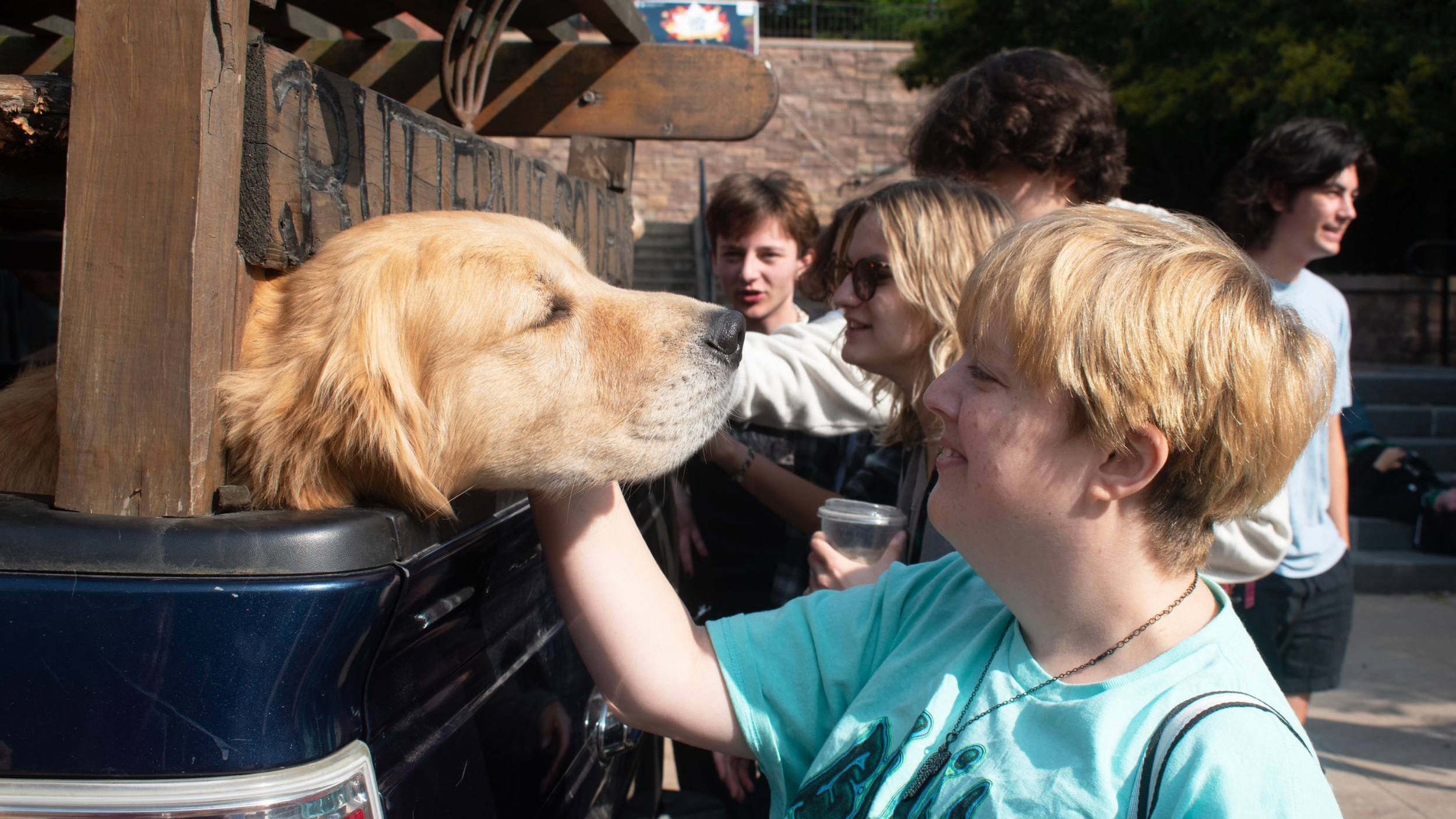
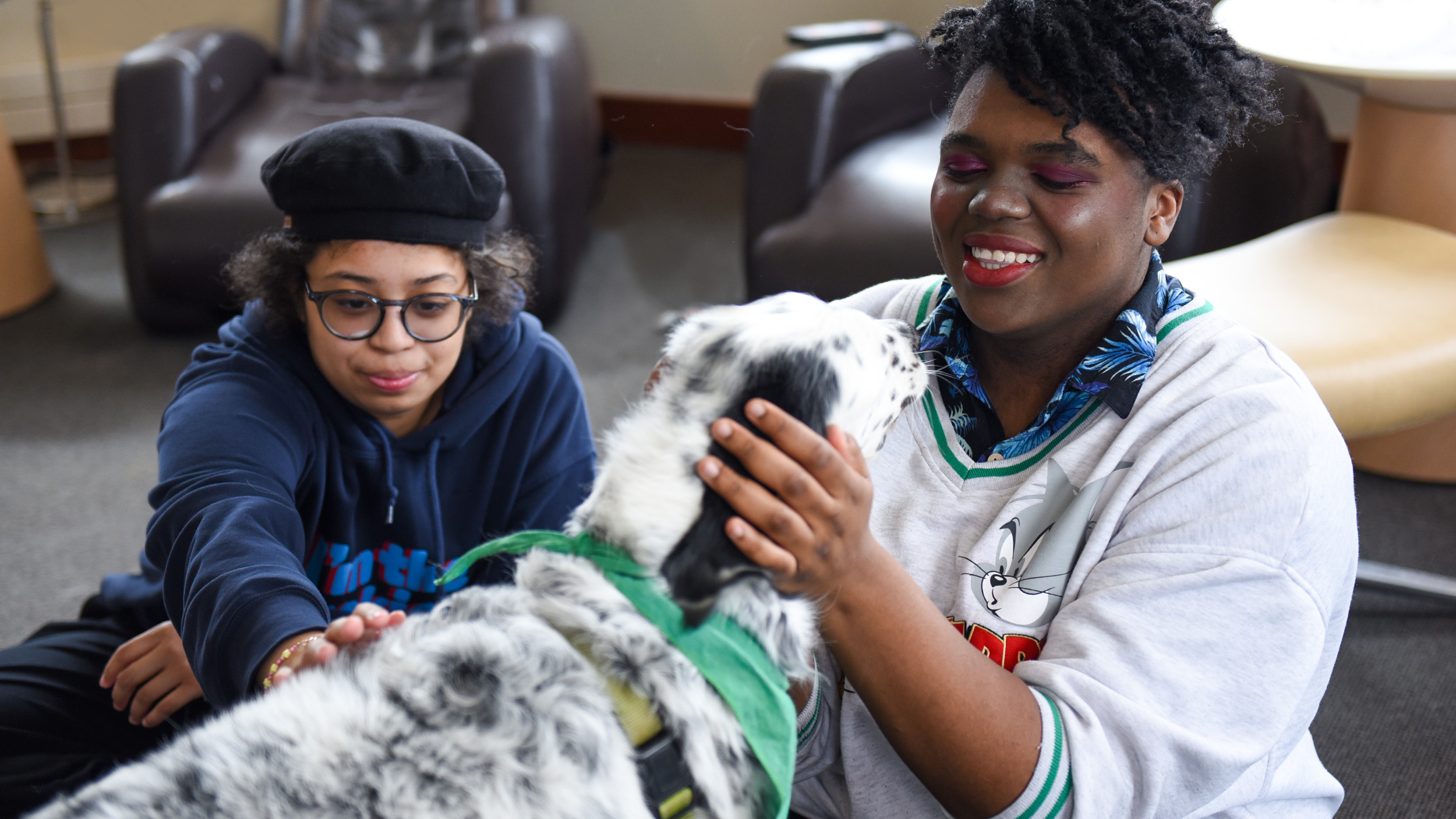
Therapy dogs visit during wellbeing week!
Emotional Support Animal Requests
Step 1: Fill Out the Emotional Support Animal Accommodation Form
To begin the process of requesting an Emotional Support Animal, students must complete the Emotional Support Animal Accommodation Request – Student Form online.
Step 2: Your Provider Submits Your Emotional Support Animal Request Documentation
The student’s provider (a certified treatment professional) must complete and return the Emotional Support Animal Request – Provider Form.
Students must complete all relevant forms and provide necessary documentation by the deadlines outlined above. Emotional Support Animal requests submitted after the deadline will be accepted, however, it cannot be guaranteed that the proposed ESA will be approved for the same term of occupancy.
Note on submitting documentation and records: All records/documentation submitted to the Office of Accessibility are stored in a secure online platform. If you are planning to submit hard copies of your documentation, we strongly encourage you to create a digital copy to submit to ensure your documentation is safely delivered. We accept digital versions of documentation via email and fax.
Step 3: Forms are Reviewed by the Office of Accessibility
The Office of Accessibility will review the Emotional Support Animal Provider form, and if our office determines it is appropriate to move forward with the request, students must complete the steps below. These steps include the required information and records and must be finished before the animal can come to campus.
- Provide up-to-date veterinary documentation (a clean bill of health and vaccination documentation – proof of rabies vaccination as well as FVRCP for cats and distemper for dogs)
- Complete an online agreement with the Office of Accessibility
- Meet with the Office of Housing & Residential Life regarding the rules and expectations for having an animal on campus
- Complete an agreement with the Office of Housing & Residential Life
- Proof of spay/neuter and flea/tick prevention
- Proof of Vermont license information (for dogs)
Requirements of Service Animals, Emotional Support Animals, and Their Owners
- The owner of the animal must be in full control of the animal at all times.
- Animals must be licensed in accordance with city regulations and, if appropriate, must wear a valid vaccination tag.
- Animals must be in good health. Any service/assistance animals occupying college housing must have an annual clean bill of health from a licensed veterinarian.
- Animals must be spayed or neutered.
- All core vaccines must be up-to-date and being administered by the veterinarian on an annual basis (if appropriate).
- Animals must be over 6 months in age and be house-trained.
- Animals must be provided preventative treatment for fleas and ticks.
- Service Animals should wear some type of easily recognized identification symbol (i.e., harness, backpack).
- Students may need to provide documentation of the continuing need for the assistance animal on an annual basis.
- The owner is responsible for appropriate waste clean-up and overall cleanliness of the animal.
- The owner is responsible for the appropriate management of his or her animal in all College facilities. Disruptive and/or aggressive behavior on the part of the animal may result in the owner being asked to remove the animal from College facilities.
- The owner is responsible for any property damage or personal injury caused by the animal, or pest control (i.e. flea treatment) required because of the animal.
Questions about Service or Assistance Animals on Campus?
The health and safety of all students, faculty, staff, and Service or Assistance Animals is an important concern. College community members who have questions about the presence of Assistance Animals, including Service Animals or Emotional Support Animals, on campus should direct those questions to the Office of Accessibility.
Contact the Office of AccessibilityWhat you should and shouldn’t do when you encounter someone with a Service or Assistance Animal.
-
 Do’s and Don’ts:
- Do NOT pet an Assistance Animal without permission of the owner; petting a Service Animal when the animal is working distracts the animal from the task at hand. Service dogs typically wear a leather harness, scarf, or sign to indicate they are working animals.
- Do NOT feed an Assistance Animal. The animal may have specific dietary requirements.
- Do NOT deliberately startle an Assistance Animal.
- Do NOT separate or attempt to separate an owner from their Assistance Animal.
- Allow a Service Animal to accompany the owner at all times and everywhere on campus except where Service Animals are specifically prohibited. Emotional Support Animals are not afforded this right, and may only be present in the student’s housing.
Office of Accessibility
Location
95 Summit Street
Mailing Address:
375 Maple Street
Burlington, VT 05401
Office Hours
8:30 AM – 4:30 PM
Fax Number: (802) 865-5764
Contact Us
Campus Resources

The Counseling Center offers a variety of services and resources in Skiff Hall. Schedule an appointment or contact our 24/7 on-call counselor.
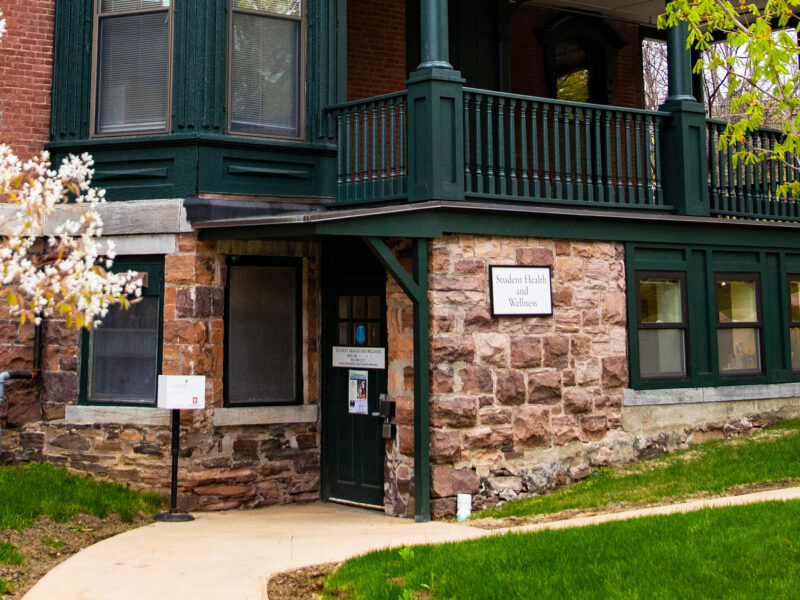
The Student Health Center is available to all degree-seeking students taking classes on campus. Get in contact with a health provider today!

Champlain is committed to providing the highest quality of wellbeing support to all students, from counseling and health services to fitness activities, academic support, and social engagement.