The Future of Computer Science: Hardware, Software, and AI
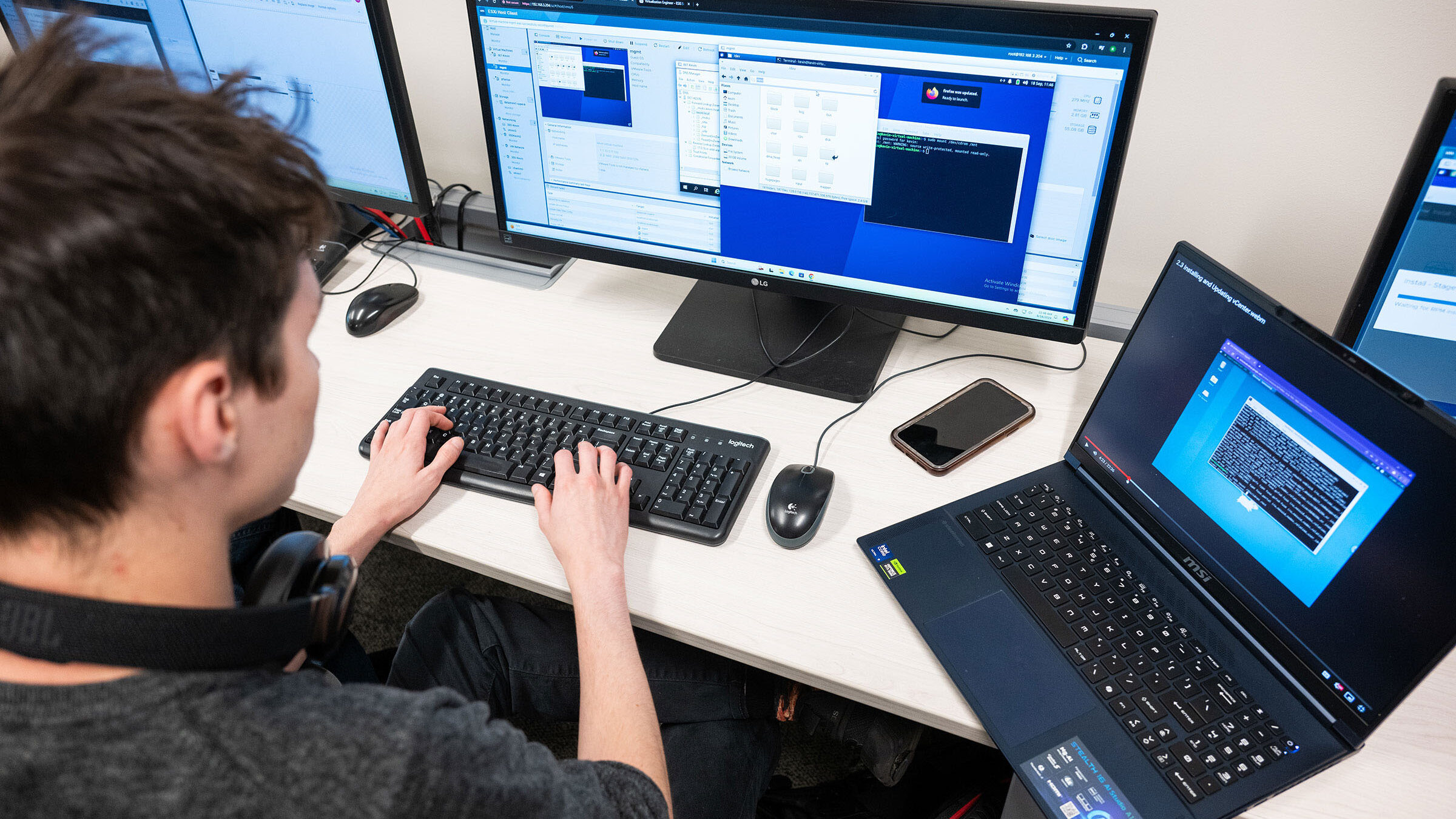
The future of computer science (CS) isn’t just being written in code. As artificial intelligence (AI) transforms how software is built, knowing where hardware fits into the picture is just as critical — especially for students deciding what they want from a CS career. If you’re thinking about studying computer science, that evolution is worth paying attention to since the field you’ll build your career in may look very different from the one that exists today.
Hardware vs. Software — What’s the Real Difference?
Before exploring where the field is headed, it’s worth understanding what you’re actually choosing between. Hardware and software represent two very different sides of computer science — and for students deciding where to focus, knowing the difference is a good place to start.
Hardware
Hardware consists of all the physical components a computer or system needs to run and perform tasks. These pieces generally fall into four categories:
- Internal components – components that power the computer/system, like the power supply or central processing unit (CPU)
- Storage devices – physical drives that hold data internally and externally, such as solid state drives (SSDs) or internal and external hard drives
- Input devices – devices connected to the computer/system that allow a user to interact with and provide instructions, like keyboards and mice
- Output devices – devices connected to the computer/system that show the user the results of operation and processing, such as monitors and speakers
Software
Software is the set of written instructions and code within a computer or system that tells it how to run. There are two main types of software, which branch into more specific subcategories.
- System software tells the computer or system how to use hardware components to function and process data. System software also controls and interacts with input and output devices. Software like operating systems (Windows, macOS, Linux), device drivers, firmware, and program language translators fall under this category.
- Application software, also known as “user applications,” is the most commonly used software type. These applications help users complete specific tasks such as browsing the web, editing photos, listening to music, or playing a video game.
- Common applications include:
- Communication platforms – Discord, Microsoft Teams, Slack, Zoom
- Productivity tools – Microsoft Office, Adobe Suite, Notion, Trello
- Web browsers – Google Chrome, Safari, Firefox, Opera GX
- Game Launchers – Steam, Epic Games, GOG Galaxy
- Common applications include:
Why Both Sides Matter
At its simplest, hardware and software work together to operate a computer or system. The software instructions tell each piece of hardware what it needs to do to carry out the requested task. One cannot work without the other.
Most people don’t think about computer science when they make a doctor’s appointment, check their bank account, or jump into an online game, but software supports many of today’s interactions. Think about the data centers hosting cellular data, the servers powering generative AI tools, and the banking infrastructure processing and storing transactions in real time. Add essential services like hospital systems that store patient records, aviation and flight control systems that keep passengers safe while flying, and encrypted databases that safeguard the tax and personal information of millions — the list goes on, and both hardware and software are behind all of it.
“We have Champlain students who work for Amazon, NASA, and Microsoft,” says Champlain College computer science professor Brian Hall, “Some of our students end up working on platform development in the insurance and banking industry because there’s a lot of technical interactions in the back-end of how those systems run and operate. Some students join or start their own start-ups or enter larger corporations. There’s plenty of opportunity in industry based on student interests.”
Not only do Champlain computer science students learn both hardware and software fundamentals and problem-solving in class, but they also apply their knowledge through real-world work.
Hands-on and All-in
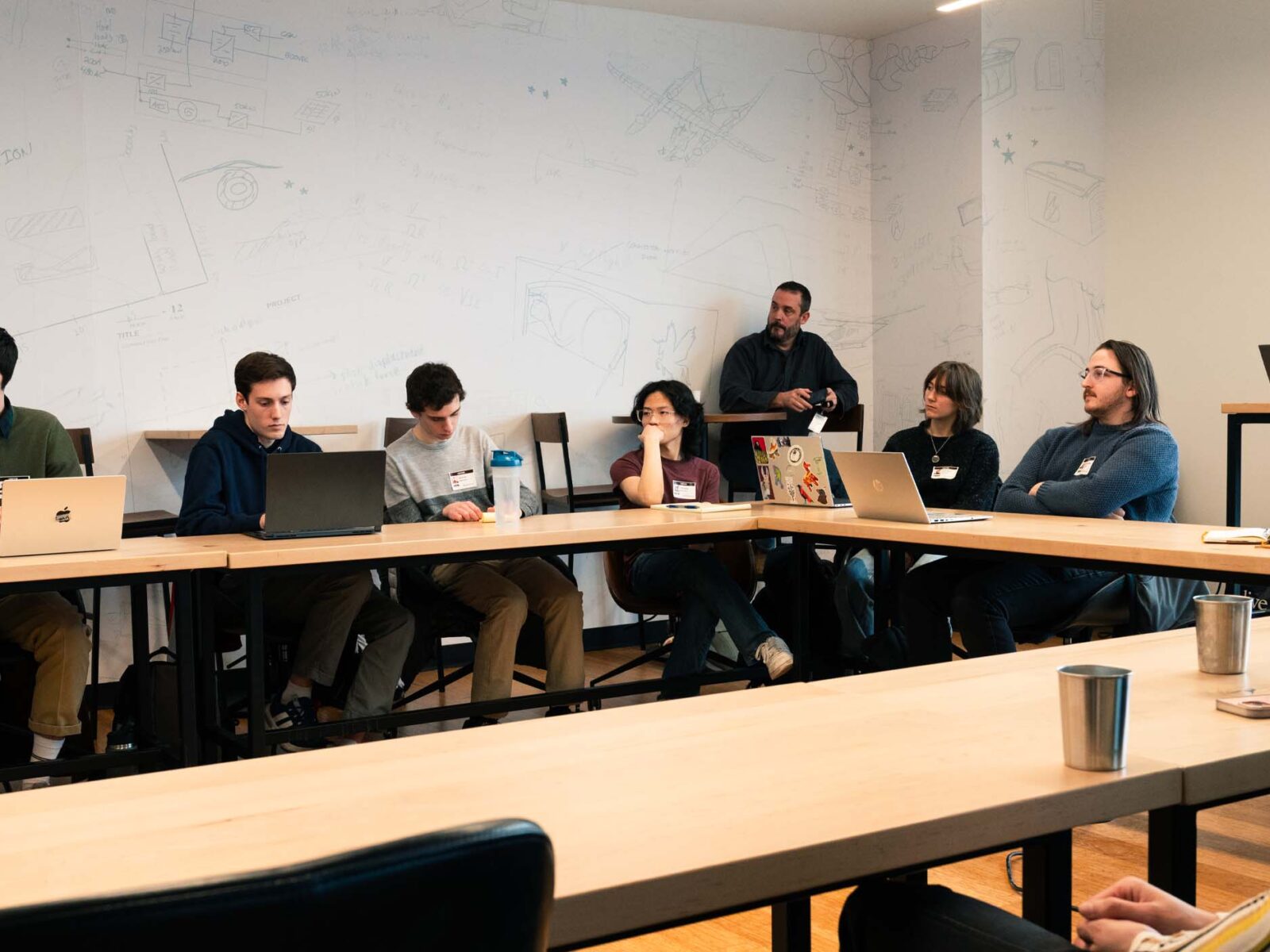
Champlain students collaborate on real projects with real clients, addressing everything from native and web-based applications and AI-driven API data flows to platform development. Through the Leahy Center for Digital Forensics & Cybersecurity and class projects, students have worked with companies including TMT Youth Foundation, Riipen, BETA Technologies, Instructure (Canvas), and Ten Six LLC.
The Analog Renaissance — Why the Shift?
Technology impacts nearly every aspect of our lives, but as screens multiply and AI-generated content floods our feeds, there’s an increased desire to disconnect. Digital burnout is real, and a growing number of people are craving a return to a more tangible lifestyle. This desire to disconnect has already begun, with many on social media calling 2026 the “year of analog.”
This shift is more than just a lifestyle trend; it’s showing up in classrooms, too. Hall’s students are actively pushing for more hardware courses each semester, where they can work with microcontrollers, circuit boards, and physical sensors more often.
“I think it’s just digital burnout to some extent,” says Hall, “that’s why things like tabletop games, paper books, and vinyl records have had a renaissance. People do have a bit more of a desire for the analog than they did 10 years ago. So, it’s the same thing with hardware — students love it, and they want a second course that’s purely hardware.”
Get Making
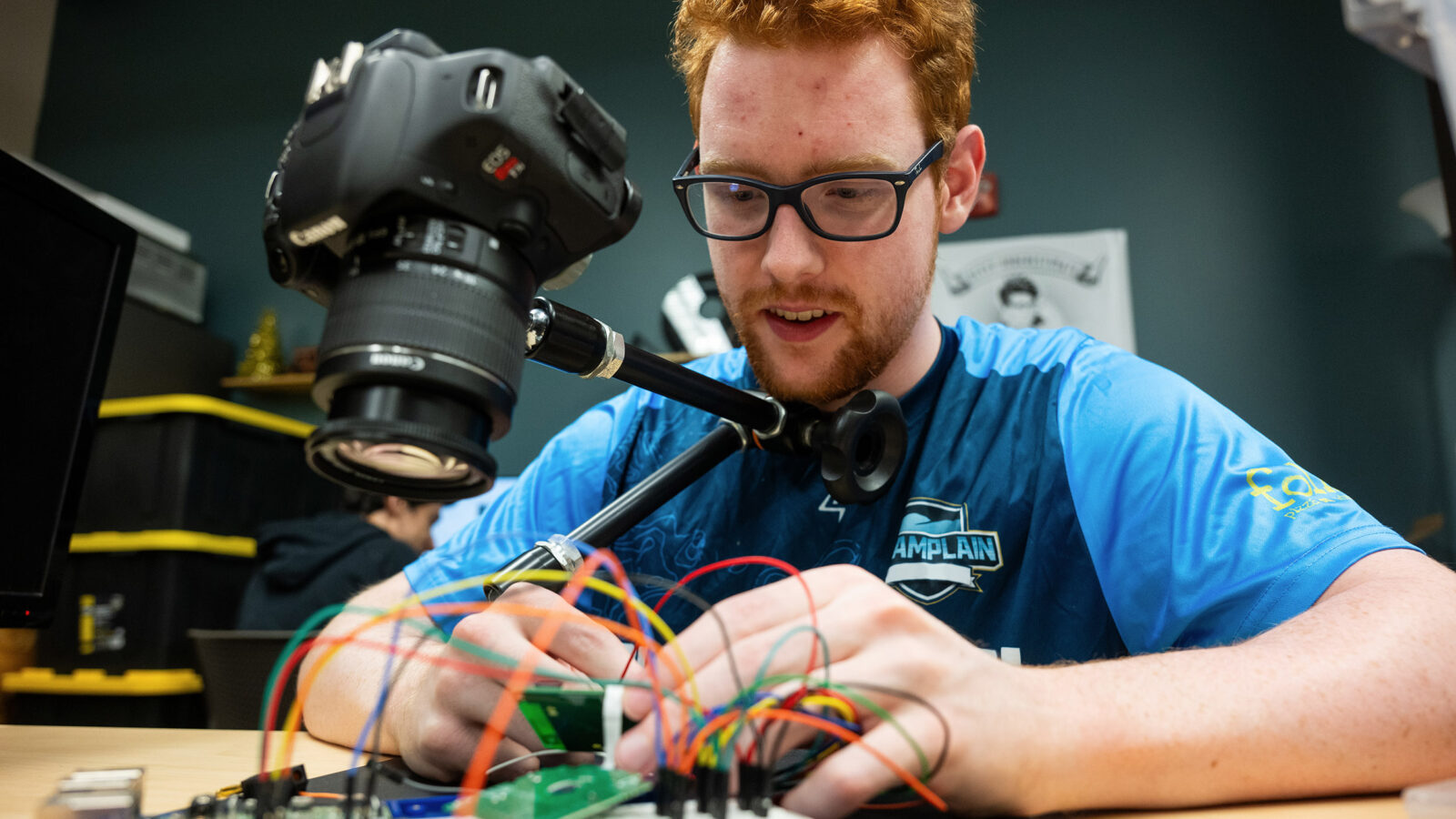
Computer architecture, robotics, and 3D printing are growing in popularity among students as well — and Champlain helps refine their skills through the Generator maker spaces, where students work on 3D models, operate laser cutters, and 3D print artifacts.
Champlain’s CS ProgramThe Digital Future
It’s no secret that AI is changing the job market. People need to know how to create those tools (including AI), monitor them, and iterate on them.
The pace at which AI is accelerating software development has raised the bar for anyone considering entry-level positions in the field. Generative AI tools are filling roles that previously required large teams for repetitive coding tasks. Processes are being streamlined. Workflows are changing. Deep learning and natural language processing (NLP) are getting smarter. But even then, the human touch can’t disappear completely: anything AI-generated still needs someone who understands it well enough to review it, catch errors, and know when something needs to be changed. Knowing how to read, evaluate, and course-correct what a tool produces is a skill that’s only going to grow in value.
We’re already seeing the results of this shift. Platform-level companies are downsizing as businesses realize they can build their own proprietary solutions. A small team of skilled developers, with the right tools and an understanding of AI workflows, can now build and maintain what used to require large, costly software contracts.
Jobs like software developers, quality assurance analysts, and testers are even more important with the rise of AI — so much so that the Bureau of Labor Statistics shows a 15% growth for jobs between 2024 and 2034, which is above average.
What This Means for You
So, what can you do to prepare for the future?
The more AI absorbs the repetitive parts of development, the more space opens up for the work that actually requires human thinking — problem solving, systems thinking, and innovation across both software and hardware.
“Use AI as a tool, not a crutch,” Hall explains. “[Computer science] skills are about problem solving. Whether you’re writing code, working on platforms, or using tools — the point is there’s a problem, and software can be used to solve it.”
The best thing you can do right now is get comfortable with AI — take classes, pursue internships or co-ops, and experiment on your own. Understanding how these tools work, not just what they produce, is what will set you apart when you enter the industry and help you succeed later down the line.
Start Here, Go Anywhere with your Career
Even if you prefer hardware, software, a mix of both, or don’t know yet, you don’t have to choose a lane right away. As the field of computer science evolves with technological advances, there are many pathways in the industry to choose from.
Jobs in computer science aren’t just limited to the “Big Tech” companies like Amazon, Apple, and Google, but are available across nearly every industry. Businesses not rooted in tech still need software and systems to complete tasks and function properly.
Some common computer science careers include:
- Platform Development
- Software Developer
- Mobile App Developer
- Computer Hardware Engineer
- Systems Architect
- AI Engineer
- Network Engineer
Whether your path leads to platform development, hardware engineering, or somewhere in between, your ability to think critically, adapt quickly, and solve problems that haven’t been solved before is your key to success in the computer science industry.


Frequently Asked Questions
Will AI replace software engineers?
The short answer is no. AI won’t completely replace software engineers, but it will change what they spend their time on.
AI tools can handle a lot of the repetitive stuff, and that means teams don’t need as many people to get the same work done. While that makes finding your first job a bit harder, the thing to keep in mind is that someone still has to tell the AI what to build, check that it did it correctly, and fix mistakes when it doesn’t. That’s still a human job, it just looks a little different than it used to.
At Champlain, we support the next generation of learners and are dedicated to implementing ethical AI practices and ensuring the future remains human-focused as these tools evolve.
Do I need a degree to get a job in computer science?
A CS degree isn’t required for every tech job, but companies do value it — especially when they’re hiring for specialized roles. Workplace experience, portfolios, GitHub accounts, and client-facing projects matter too, but a degree can tie it together. At Champlain, you can start specializing early in areas like software engineering, mobile app development, or AI, and build skills from day one.
Why is computer science important?
Computer science is the backbone of modern society. It is banking apps, the check-in screen at your doctor’s office, the payment terminal at the airport or grocery store — it’s what makes your phone, your laptop, and your refrigerator work. Fields like law and finance run on tech too, even if they don’t advertise it. The demand for CS professionals will remain as more of daily life relies on technology, hardware, and software.
Consider a Degree in Computer Science from Champlain College
A degree in computer science helps prepare you for entering the industry and gives you the baseline knowledge and experience employers look for. Having professors and peers around you to offer guidance and support throughout your courses and experiences is valuable.
At Champlain, students don’t just sit in classrooms and get talked at — they learn through practical experiences with real-world companies and teams. “It’s like a ramp,” says Hall, “one opportunity turns into another. You want to be the student getting the opportunities that our students are getting. And obviously, employers want people who can hit the ground running with practical experience.”
Ready for what’s next? Learn more about Champlain’s Computer Science degree program.
Looking for more information about Champlain College? Start here!
Fill out the form to receive helpful information!
Author

More Inside The View
Ideas
From the minds of our students, faculty, and alumni.
News
The latest from Champlain College.
People
Champlain is more than just a place; it's a community.
Places
On campus, in Burlington, and beyond.
Events
Check out our many campus events and get involved! Refine your search by using the filters or monthly view options.