Essential Game Programming Skills Every Developer Needs

Whether you’re building your first indie game or joining a AAA (Triple-A) studio, mastering the right game programming skills, languages, and game engines is key to becoming a successful programmer. From C++ and Unity to debugging and version control, this guide breaks down the core skills and tools every developer needs for a career in game programming. Plus, find out how Champlain College prepares students to meet industry demands and create immersive, interactive gaming experiences.
What Is Game Programming?
Game programming is where the real magic of game development begins. Programmers write the code that transforms concepts and ideas into immersive worlds. Everything you see, from the way characters move to how players navigate game menus, exists because of the code they write. This means understanding programming languages is crucial for getting started as a game programmer.
Programming Languages
Video game programming skills start with mastering the right languages. Each language serves different purposes, like supporting powerful game engines, rapid prototyping, or cross-platform development.
C++
C++, or C plus plus, is a programming language that gives developers direct control over a computer’s memory. It’s ideal for experienced coders rather than beginners, and its speed and performance make it the perfect go-to language for AAA games. C++ plays a huge role in game development and serves as the foundation for game engines like Unreal Engine, which we’ll cover later in this guide.
C#
C#, or C sharp, is a programming language considered more beginner-friendly since it’s easier to read and write, and uses automatic memory management. This means programmers don’t have to worry about manually tracking and clearing the computer’s memory while the program runs. C# is commonly used for web and mobile app development. It’s also a popular choice in game development, especially with game engines like Unity.
Python
Python is another high-level, beginner-friendly programming language. It’s useful for tasks like scripting and rapid prototyping, and it has open-source libraries designed for game programming, making it ideal for indie game development.

Game Engines
Game programming requires specialized tools to build, test, and develop games efficiently across multiple platforms. This brings us to game engines, which are pre-built software that make animation, sound, graphics rendering, physics simulation, and input management much simpler. Some of the most popular game engines include Unity and Unreal Engine. Each engine has its own strengths depending on the type of game being built, such as mobile, console, PC, or VR/AR.
Unity
Unity is a game engine that uses C# as its programming language. Its greatest strength lies in its versatility — it can handle a wide variety of game genres, art styles, and platforms, supported by rapid prototyping, making it extremely popular for indie, mobile, and VR/AR games. Many of the games you’d find on your phone or on gaming platforms like Steam were likely built with Unity. Pokémon GO and Subway Surfers are just two examples among many.
Unreal Engine
Unreal Engine is a game engine that uses C++ as its primary programming language, though it also includes a visual scripting system called Blueprints that allows developers to create game logic and functionality without code. Unreal Engine produces incredibly realistic, high-quality graphics and performance, making it a favorite among big-budget AAA games. Fortnite and Grand Theft Auto V are examples of games that use this powerful game engine.
Developer Tools for Game Programming
Integrated Development Environments
Game programmers also rely on specialized software called Integrated Development Environments (IDEs), which help write code, spot mistakes, suggest fixes, and understand exactly what your code is doing as it runs. Some of the most common IDEs you’ll find in game programming include Visual Studio, Rider, and Xcode.
Version Control
Team collaboration is key to game programming, and this is usually managed through version control systems like Git and GitHub. These tools keep track of every change to a project, so multiple programmers can work on the same game at the same time without accidentally overwriting each other’s work. Every professional game studio uses version control, so knowing how to use it is a must.
Debugging
When something goes wrong in a game, such as glitches, freezing, or crashing, programmers use debugging tools to figure out exactly what the problem is and where it’s coming from. Both Unity and Unreal Engine have built-in tools for this. This is another skill that employers seek in entry-level programmers.
Project Management Systems
Keeping an entire game development team organized isn’t an easy feat, which is where project management tools like Jira or Trello come in. These management tools help teams track tasks, log bugs, and make sure everyone, from programmers to artists and designers, is on the same page throughout the development process.
Mathematics for Game Programming
Math is a core part of programming, and there are a few key areas every game programmer needs to understand.
- Linear algebra covers topics like vectors, which are used to determine where objects are positioned, how they rotate, and their sizes.
- 3D math builds on these topics, which help programmers control how cameras move and how character animations are calculated.
- Physics, simulation, 3D graphics, rendering, and algorithms also play crucial roles in game programming.
How to Build Game Programming Skills
Whether you’re just starting out or looking to level up your existing skills, there are plenty of ways to build entry-level game programming skills.
Personal Projects
Every game programmer starts somewhere, and building simple games is one of the best ways to learn the fundamentals. You can start by recreating classic games like Pong or Frogger, which are simple but teach you essential programming skills. You can also learn version control with GitHub, debugging, or other game programming tools. And if you run into any trouble, YouTube is a great place to find game programming tips and tutorials from experienced developers.
Documenting your process as you build, including challenges you faced and how you solved them, also gives you plenty of valuable material for presenting your work in a portfolio. A great way to get started is by challenging yourself to complete a small game within a set deadline, which pushes you to make decisions quickly and build good habits early.
Game Jams
Game jams are challenges where teams build a game from scratch, and this typically lasts anywhere from 24 to 72 hours. These events can happen both virtually and in-person, and are excellent for building collaboration and time management skills. The tight deadline pushes you to prioritize what matters most and to work efficiently with others.
They’re also a great way to network and connect with other developers who share your passion, and could become future collaborators or colleagues. The annual Global Game Jam is a great place to start, welcoming developers at every skill level.
How to Build a Winning Game: A Step-by-Step Guide
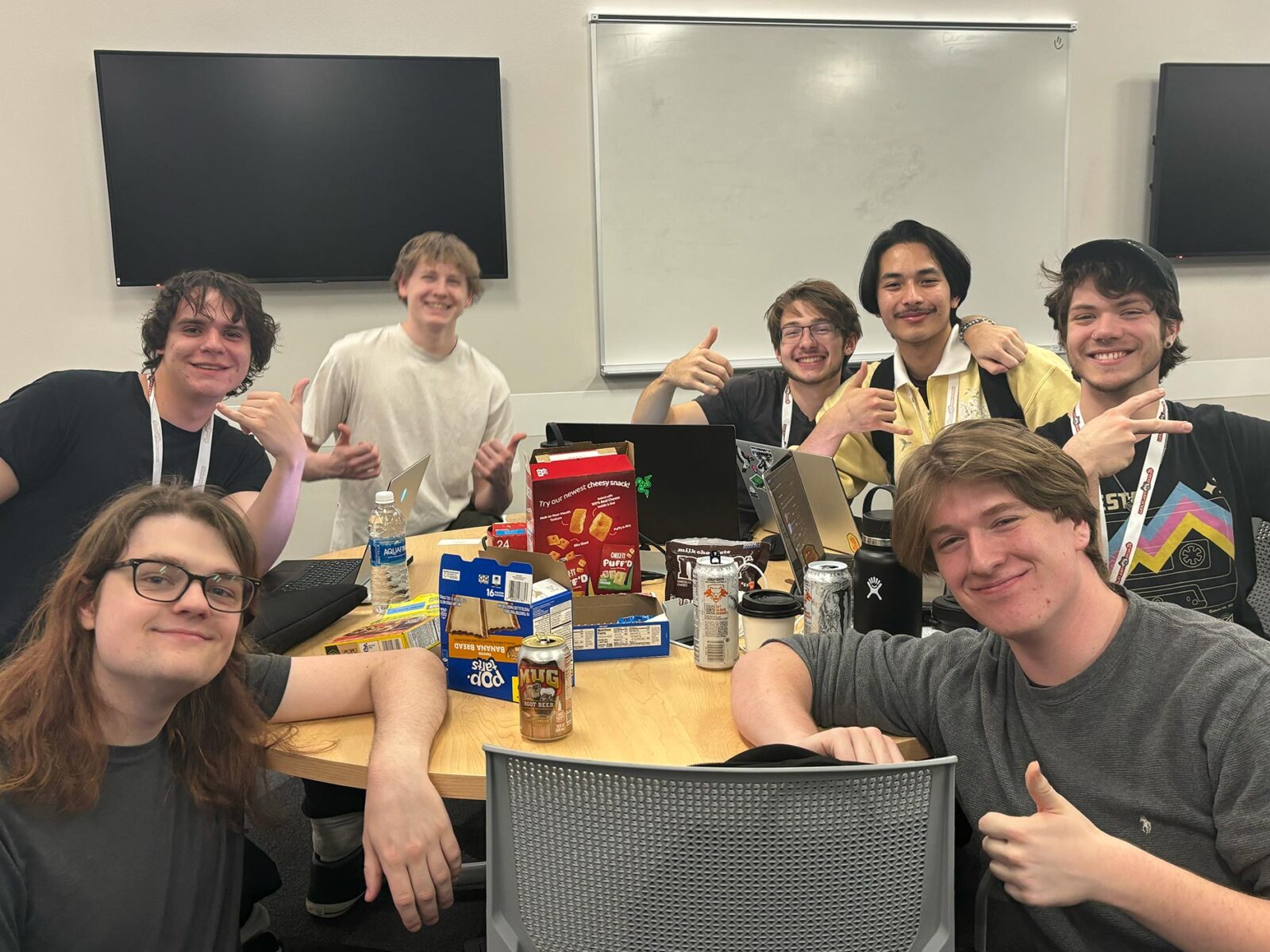
Learn more about how a team of Champlain students built (and won!) a game in a 26 hour game jam.
Read MoreOpen Source
Contributing to open source projects means working with real, established codebases, which gives you hands-on experience with the kind of large-scale code you’ll encounter in the professional world. Platforms like GitHub have a wide range of game engine plugins and tools you can contribute to, and the Unity Asset Store is another great place to share work and build your skills.
Formal Education
A formal education in game programming gives you access to a structured curriculum built around industry-standard tools, so you’re learning the same technologies and best practices that professionals use. Formal, college-level education also comes with mentorship in the classroom from working professionals, which means you’re also getting feedback and guidance from people who are or have been in the industry.
Champlain College’s Game Programming degree allows students to dive headfirst into the full scope of game development, offering coursework, hands-on experience, and networking opportunities to build these career-ready skills.


Frequently Asked Questions
What degree do you need to become a game programmer?
A bachelor’s degree in a field like software engineering, computer science, or programming can be helpful when entering the game development industry, though it isn’t always required. Employers are on the lookout for programmers with real-world experience and skills, which you can build through personal projects or coursework, internships, and co-ops in Champlain College’s Game Programming degree.
Is a game programming degree worth it?
Game programming is in demand, and the industry continues to grow. The U.S. Bureau of Labor Statistics predicts 15% job growth for game developers between 2024 and 2034, which is higher than the average job growth rate. Though the gaming industry is highly competitive, a degree is a great way to stay current with the latest technology in the field and open doors to connections and networking opportunities.
Which programming language should I learn first?
Python is a great place to start for beginners and offers several resources for game programming. C# is also considered easier to work with because it’s easier to read and write, and it handles much of the heavy lifting of memory management. If you’re comfortable with coding fundamentals, you can start C++.
All three are great languages for game programming, and each has its strengths. It all really just depends on what you’re building.
How is Artificial Intelligence reshaping game programming?
Artificial Intelligence (AI) is being used to create smarter non-player character (NPC) behavior and to automatically generate game content, such as levels and environments, as well as other aspects of game development. AI will continue to play a supporting role in game programming.
Start Building Your Game Programming Skills at Champlain
Champlain College’s Game Programming degree prepares students with hands-on experience in Unity and Unreal Engine, mentorship from industry professionals, and portfolio projects that demonstrate real-world experience to employers. Students graduate with the technical skills, collaborative experience, and professional network needed to launch careers at studios ranging from indie developers to AAA publishers.
Looking for more information about Champlain College? Start here!
Fill out the form to receive helpful information!
All trademarks, service marks, trade names, and logos referenced in this article are the property of their respective owners. All company, product, and service names used in this article are for identification purposes only.
Author



More Inside The View
Ideas
From the minds of our students, faculty, and alumni.
News
The latest from Champlain College.
People
Champlain is more than just a place; it's a community.
Places
On campus, in Burlington, and beyond.
Events
Check out our many campus events and get involved! Refine your search by using the filters or monthly view options.