What Can You Do With a Film Degree?
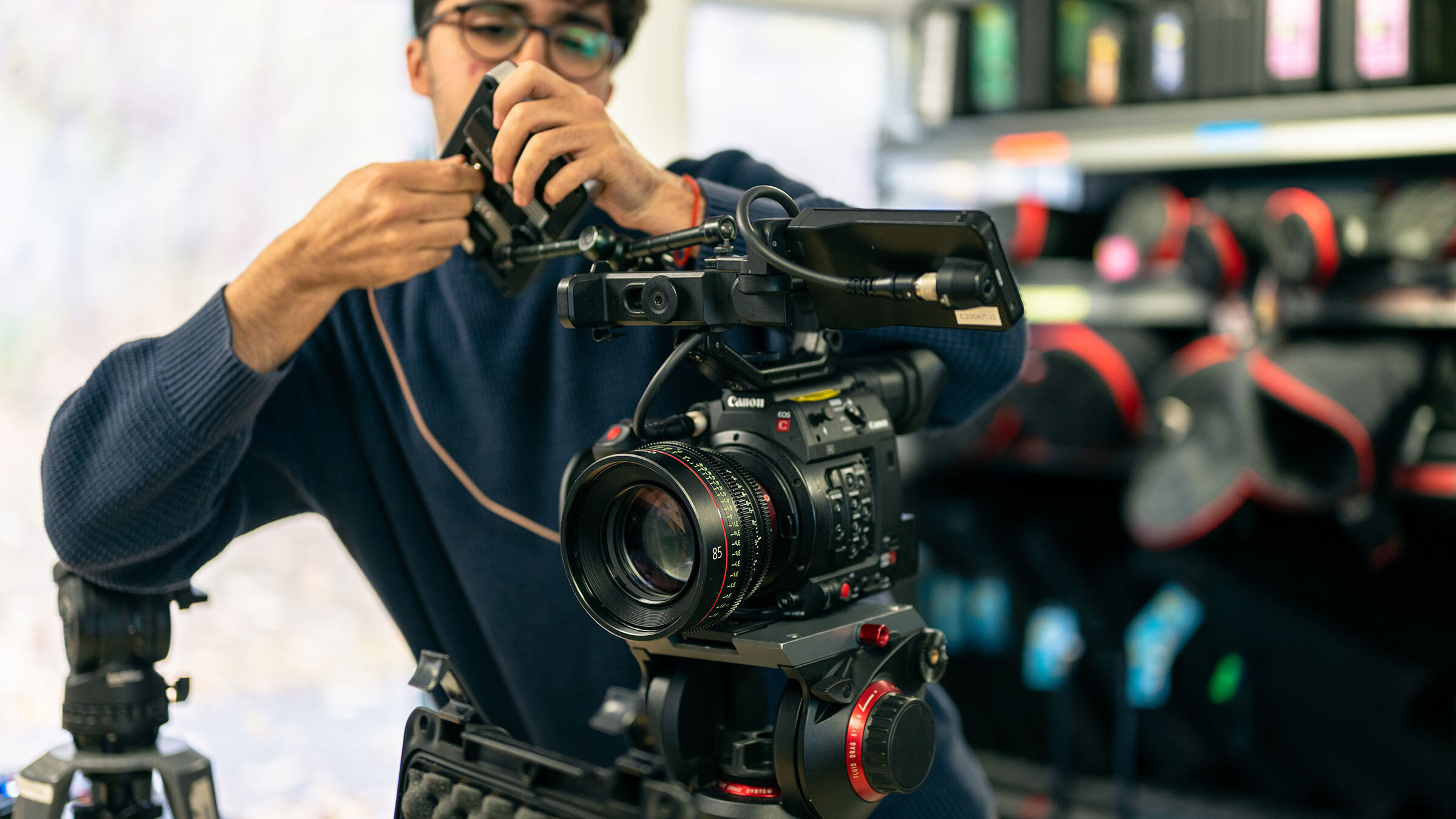
Let’s be honest about what you can do with a film degree and where the industry is right now. A historic $110 billion merger between Paramount and Warner Bros. is underway. When it closes, the Big Five studios — Disney, Paramount, Sony/Columbia, Universal, and Warner Bros. — will become four.
Mid-budget films, which once gave generations of directors, writers, and filmmakers a steady living, are leaving theaters for streaming platforms. And as studios greenlight fewer projects, there is less room for new voices in film.
If you’re thinking about studying film, you deserve clarity. But here’s the thing: this article isn’t an argument against studying film. It’s one that makes the case for pursuing a hands-on filmmaking program that prepares and positions visual storytellers for the growing demand.
Streaming Has Changed the Market and What Gets Made
Before you can see the opportunities, you first have to understand the changes ushering in a new era of film. While several forces are reshaping the industry, one of the most obvious is the emergence of online streaming platforms.
For decades, the box office was just the beginning of a film’s total revenue stream. From there, VHS, DVD, and Blu-ray sales helped fund mid-budget films. Viewers were incentivized to pick up physical copies with special-edition releases, bonus content, director’s cuts, and deleted scenes. Netflix, Hulu, and Amazon Prime wiped out physical media sales and shook that long-standing funding model that helped make creative risk-taking profitable.
Traditional Studios Now Compete with Streaming Studios
The 98th Oscars are a great example of the changing nature of film. To qualify for an Oscar, a film must play in theaters. For decades, 90 days was the standard theater run before a distributor would pivot to home video.
Of the 10 nominees for Best Picture at the 2026 Oscars, streaming platforms released three of them — Netflix and Apple both had films in the mix. They worked around the theatrical requirement by releasing limited runs in select theaters to qualify for nominations.
Film Success is Measured in Dollars and Data
Film school teaches you the ins and outs of how to make a movie, and it also touches on the business side of film. When it comes to making a profit, doing a limited release in select theaters for a film that cost $120 million to make (like Netflix’s Frankenstein) sounds counterintuitive.
But for streaming platforms like Netflix, profit comes from viewer data. Collecting stats on viewer retention, interest, and trends allows streaming companies to invest in making original films that they think will succeed on their platforms, and that they ultimately own the rights to. It’s a long-term investment.
Remember that steady stream of mid-budget movies we mentioned earlier? Those productions and stories are still being made; today, they’re just taking shape as miniseries, where viewer retention data drives every decision. For film students entering this era, the shift in focus from dollars to data is just the start of what’s changing.
Get Inspired
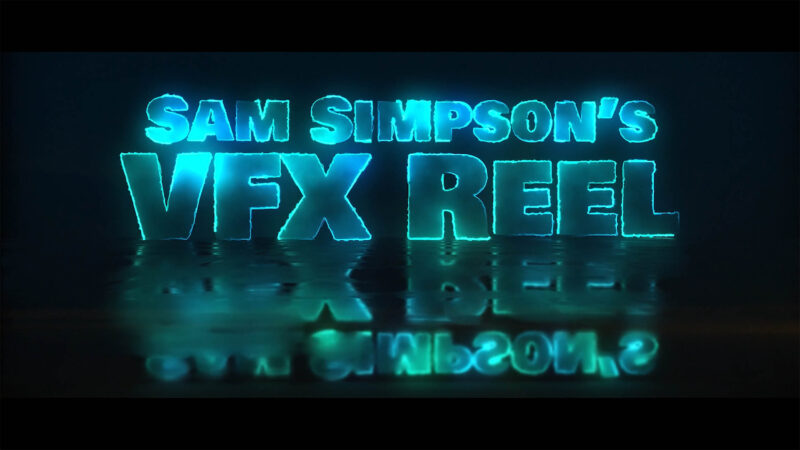
Interested in film school? Check out real work made by actual Filmmaking students at Champlain College.


People Still Want a Show — Just Not at the Movies
While articles and reports may show negativity, there’s an upward trend highlighting that people aren’t just staying home and streaming content. They’re going to concerts, festivals, and sporting events — and paying more than ever to do it.
According to a report by Allied Market Research, the global events industry was valued at $736.8 billion in 2021 and is projected to reach $2.51 trillion by 2033. The appetite for shared, in-person experiences, the thing a streaming platform can’t replicate, is growing, and that means careers in film and television are evolving rather than disappearing.
Film Technology and Principles Align Well with Live Events
The production level and technology behind live events today are more similar to that of filmmaking than you might imagine. For example, The Las Vegas Sphere, built in 2023, has an interior screen that wraps 17,500 seats in 256 million pixels of LED display. On top of that, its servers can process uncompressed video in real time, making geometric adjustments to fit the curved surface.
Not only is the video impressive, but the audio system delivers custom sound to every section of the house from 167,000 speakers. Ten thousand seats have haptic feedback that vibrates in sync with the audio. These technological advancements are paving the way for immersive film experiences like never before.
12 Careers You Can Pursue with a Film Degree
A filmmaking degree opens a wide range of paths — some in traditional entertainment, and many in other unexpected areas. As Champlain College’s Filmmaking Program Director, John Rasmussen, puts it: “Everybody wants content — for their social media, their website, their business. That will be revenue for students as they go out, and they have a lot of different skills that they can adapt.”
“If someone wants to make their life in movies, we cannot guarantee fame. But if that’s not the thing — if you just like being part of the creative process, whether that’s working with people on set or being in your editing bay by yourself — then there are so many different avenues. And you can also have an income, which is really important,” he adds.
Unexpected Careers in Film:
| Career | Skills You Learn in Film School | Expected Salary |
| 1. Corporate Videographer/Editor: End-to-end video production for businesses, brands, and organizations |
|
$70,980 |
| 2. Social Media Producer: Creating and editing short-form video content for brands, media companies, and platforms |
|
$120,226 |
| 3. Live Broadcast Operator: Operating cameras and producing live video for sports, news, and entertainment |
|
$93,40 |
| 4. Sound Designer/Audio Engineer: Designing and engineering audio for media, entertainment, and live events |
|
$86,461 |
| 5. Documentary Filmmaker/Content Creator: Researching, producing, and editing long-form stories for streaming, brands, and independent channels |
|
$83,480 |
| 6. Animation & Motion Graphics Artist: Creating animated and motion content for advertising, apps, broadcast, and live environments |
|
$99,800 |
| 7. Film & Entertainment Marketing: Producing trailers, campaigns, and platform content that drives audiences to films, shows, and events |
|
$127,610 |
| 8. Live Event Producer: Managing full-scale productions for concerts, corporate events, and hybrid broadcasts |
|
$118,000 |
| 9. Production Coordinator / Production Assistant: Keeping productions on schedule and on budget through logistics, crew, and vendor management |
|
$83,480 |
| 10. Set Designer: Designing and building physical environments for film, television, theater, and live events. |
|
$99,860 |
| 11. Post-Production Supervisor / VFX Artist: Overseeing post pipelines and creating VFX, compositing, and color work for film and streaming |
|
$99,800 |
| 12. Film Educator: Teaching film production and media literacy at the K–12 or college level |
|
$83,980 |
All salary data was sourced from the U.S. Bureau of Labor Statistics, Glassdoor, Ziprecruiter, and Salary.com
What Makes a Filmmaking Degree Practical
As all good movies do, the college experience should include some unexpected twists and turns along the way. This is how all students — including budding filmmakers — grow into their passions and professions. At its core, what makes a hands-on filmmaking degree practical is “the time and space to learn the language and to experiment — where you have access to gear, access to crew, access to facilities, and a supportive community,” says Rasmussen.
“We have some students who come in saying ‘I want to be a writer,’ and then they leave saying ‘I really like cinematography — I’d like to spend my time doing that. I’m not going to lose writing, but this is really cool. And I didn’t think I was cut out for it until Champlain,’” he adds.
Why Hands-On Matters
It’s worth defining what ‘hands-on’ actually means. In a production-forward film program like Champlain’s BFA in Filmmaking, you’ll graduate with a reel of work that includes short films and your Capstone project. You’ll operate professional cameras, mix audio on industry-standard boards, and direct actors in front of a crew. With hands-on classes, you’ll know what it feels like to have production fall apart on day two, yet have the support to solve problems in real time.
Experience can’t be faked — not just because it makes you a better, more well-rounded artist, but because employers and collaborators can see the difference right away. A student who learned Adobe Premiere through an online tutorial is not the same as a student who learned it in class, using real footage they captured with a crew and professional gear. That’s the difference you’ll see in a Champlain filmmaking student.
Getting a film degree from a school that gives hands-on support and experience helps to develop transferable skills across every career in this list:
- Visual storytelling: Communicating through images, structure, and sequence — in demand in marketing, live events, healthcare, and any organization that needs to connect with an audience.
- Technical fluency: Cameras, editing software, lighting systems, sound tools — film grads learn how to master new technical tools quickly. That ability to adapt matters as much as any specific tool.
- Collaboration under pressure: Every production is a team project with real time and budget limits — the same demands you’ll find in live event production and corporate communications.
- Project management: Scope, budget, schedule, and stakeholders are part of every student production before any professional job title comes with them.
- Audience awareness: Thinking about who is watching and what they’re experiencing — the core skill of filmmaking, marketing, live event design, and UX work alike.
The Peer Filmmaking Community
Another thing the self-directed learning path can’t offer is the creative community that a residential program fosters. Rasmussen says it simply: “I have a lot of film friends, but I am sometimes more inspired by my painter friends, or my poet friends, or people who make music. You hear a poem and you’re like, ‘Man, I want to make that into a movie.’”
Hands-on film programs like Champlain’s support cross-collaboration that makes originality and inspiration feel like second nature. Film majors at Champlain share classrooms with writers, graphic designers, game developers, and musicians in the Creative Studio. The curriculum is built to encourage that mix through shared electives and collaborative projects. The connections you make with peers who think differently than you do are often the ones that define your career.



Frequently Asked Questions
Is film school worth it?
Yes — especially because the industry is changing. In a disrupted market, a filmmaking degree is worth more, particularly for programs that build fluency in both traditional craft and emerging technology. Plus, the project management skills you’ll get from a film degree help you to work across industries.
How does film school translate to live event production?
School-to-live event production transfers directly. Production design, lighting, camera work, sound design, editing, and project management are the same skills that power modern in-person events. LED wall techniques developed for cinema are now standard in high-end event venues. Event producers who understand the ins and outs of filmmaking and emerging technologies are well-positioned as this overlap spreads.
What are the highest paying jobs in film?
The strongest-paying careers for film graduates include:
- VFX supervision and animation (BLS median: $99,800)
- Entertainment marketing direction (BLS median: $126,960)
- Live event technical direction (average: $125,998)
- Sound design for games (average $86,461)
- Corporate video production (average $70,980)
Can you work in film outside of Los Angeles or New York?
The short answer is yes.
Atlanta, Austin, Chicago, Vancouver, Toronto, and Cincinnati all have active film and production communities, but it doesn’t stop there. Live-event production exists anywhere there are venues and brands. Today, virtual production pipelines and remote post-production workflows have furthered geographic freedom. Opportunities exist globally if you look for them
Start Your Filmmaking Career Today
The film industry is in a period of disruption. Studios are merging. Most mid-budget theatrical films have moved to streaming services. The industry is rewriting the economics that once supported a generation of working filmmakers.
But the media industry (including marketing and social media industries) and the live entertainment industry are growing. More and more, the technology powering live events is converging with that of film production.
The demand is high for people who can create compelling visual experiences — and deciding to pursue a filmmaking degree isn’t a gamble. Careers in film and television, live events, marketing, and a dozen adjacent fields are all within reach. The question isn’t whether a film degree leads to work — it’s which of the many paths is right for you.
At Champlain College, the Filmmaking BFA is designed for the industry as it actually exists — not as it used to. Students in the program work on real productions from day one. They get a curriculum that they can customize and intersect with areas like game design, sonic arts, marketing, and more. To top it all off, they’re guided by working professionals who know how to firsthand what it takes to build a career in a changing industry.
Looking for more information about Champlain College? Start here!
Fill out the form to receive helpful information!
Author



More Inside The View
Ideas
From the minds of our students, faculty, and alumni.
News
The latest from Champlain College.
People
Champlain is more than just a place; it's a community.
Places
On campus, in Burlington, and beyond.
Events
Check out our many campus events and get involved! Refine your search by using the filters or monthly view options.