Why is Friday the 13th Unlucky?
We’ve all heard about one of the most ‘unlucky’ days on the calendar, but what is the history behind Friday the 13th? Why exactly is it so well-renowned for its poor luck? According to Kerry Noonan, a folklorist and professor here at Champlain College, the answer isn’t straightforward.
Last month on Friday, February 13, Kerry Noonan spoke with Boston Public Radio’s The Curiosity Desk to explain the origins and cultural significance of the day and other folk beliefs. As luck would have it, we now have another Friday the 13th just one month later.
Let’s go over what we learned in Noonan’s segment.
History of Friday the 13th
“We don’t really know when this began,” Noonan explained during the broadcast. “It’s very hard unless someone writes something down in the past. We don’t know when it started.”
Oftentimes, folklore is spread orally, which means passed down as stories told to each other instead of being written down. This makes finding a specific “origin” to the tale is near impossible. Instead of focusing on finding a specific time and date, we can instead break apart the various aspects of culture and history that led to Friday the 13th being so unlucky.
Let’s Break it Down
Why is Friday Considered Unlucky?
The unlucky reputation of Friday is largely rooted in medieval Christian Europe. Friday was widely believed to be the day of the Crucifixion of Christ. Because of this, Noonan explained, medieval Christians began attributing more unfortunate events to the day: Adam and Eve’s original sin, Cain’s murder of Abel, and the start of the Great Flood were all said to have fallen on Fridays.
NOTE: This is mostly a Western Christian folkbelief. In Islam, Friday is a holy day. In Judaism, it’s the eve of the Sabbath. “It was mostly Christian Europe that was thinking about this,” Noonan pointed out.
Why is the Number 13 Considered Unlucky?
Friday isn’t the only part of the equation considered unlucky; 13 has its own reputation. The most frequently cited explanation is the Last Supper: Jesus and his twelve disciples made thirteen at the table. As a result, having 13 people at a dinner party became associated with bad fortune: a belief that was written down as early as the 1700s .
These unlucky 13 references only continued to spiral into other aspects of life. In fairy tales like Sleeping Beauty, 12 fairies were invited to bless the newborn princess. The uninvited 13th turned out to be the villain. While Tarot used to be unnumbered, the card Death was assigned to the number 13 in the Major Arcana by at least 1565.
Illustration by Cierra Rossi ’27
Like Fridays, 13 isn’t unlucky everywhere in the world. In Italy, 13 is actually considered a lucky number; 17, on the other hand, was unlucky due its roman numeral (XVII) being an anagram of the latin word VIXI (“I have lived”)– symbolizing death. This makes Friday the 17th their unlucky day. In Mandarin-speaking cultures, the word for “four” resembles the word for “death”. Noonan noted that hotels in cities like Hong Kong, home to both European and Mandarin-speaking populations, sometimes skipped both the 4th and 13th floors.
Unfortunate Events on Friday the 13th
What about the history of the matter? Spanning back into the High Middle Ages and the 11th century, there have been plenty of events possibly known as the “origin” of Friday the 13th. While these aren’t at the forefront of people’s minds, they are often referred to retroactively in relation to this unlucky day.
Some historically bad days include:
- November 13, 1002 — The St. Brice’s Day Massacre, in which King Æthelred the Unready ordered the killing of Danes living in England
- October 13, 1307 — King Philip IV of France arrested the Knights Templar, effectively dismantling the powerful military order
- September 13, 1940 — German bombers struck Buckingham Palace during the London Blitz
- March 13, 2020 — COVID-19 was declared a national emergency in the United States
The Psychology Behind Friday the 13th
So why is it that every Friday the 13th roles around, we still feel like nothing is going our way?
Whether or not anything unusual actually happens, the day has a way of making us notice the bad things when they do occur. Noonan says: “On another day I might spill my tea and just go, ‘Oh, well’ — but on Friday the 13th I may think, ‘of course, because it’s Friday the 13th.’” Humans have a knack for noticing patterns in events or feelings. Sometimes, you start to expect the bad things, like spilling your tea or tripping over your shoelaces.
Illustration by Cierra Rossi ’27
This connects to a broader point about why folk beliefs persist at all. Noonan cited anthropologist Bronisław Malinowski: “Magic beliefs and behaviors bridge the gap between what we can control and the outcome that we want.” When there is an outcome we can’t control: performing in front of a huge crowd, a sports game where your favorite team is playing, or right before a medical procedure, folk beliefs and rituals bridge that gap.
The Phobia of Friday the 13th
For some people, the dread goes beyond looking out for spilt milk. The official name for the fear of Friday the 13th is paraskevidekatriaphobia, derived from the Greek words for Friday (Paraskevi) and thirteen (dekatreis). Those with paraskevidekatriaphobia may avoid travel, appointments, or major decisions on the date.
Friday the 13th Movies Fuel the Fire
If there’s one modern force that cemented Friday the 13th, it’s the horror movie franchise. The original 1980 film was made on a small budget and earned over $60 million at the box office, making it one of the top-grossing movies of its year. This led to twelve more films, each following the killer Jason Voorhees and Camp Crystal Lake.
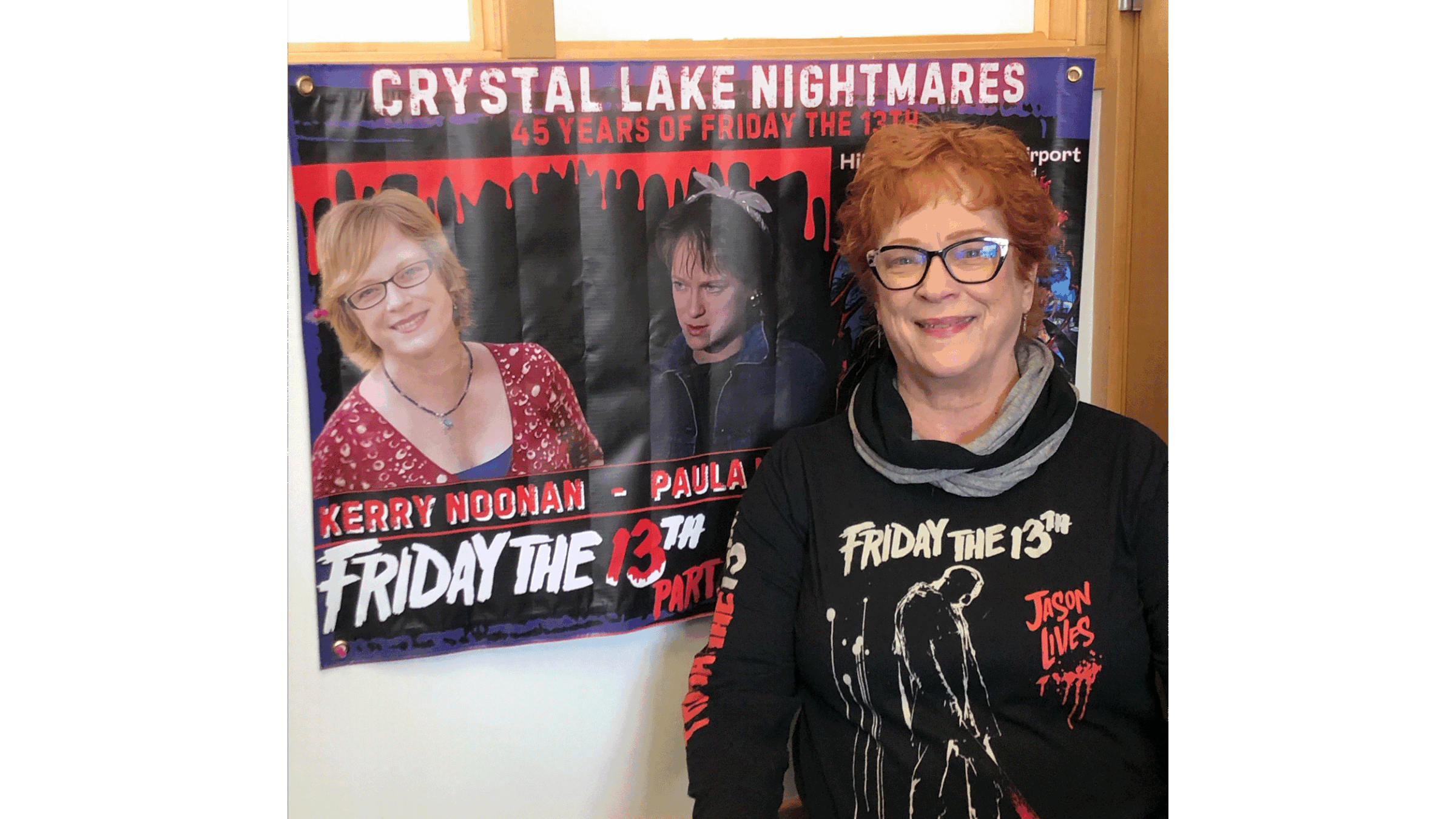
Here’s a fun Champlain connection: Kerry Noonan actually appeared in Friday the 13th Part VI: Jason Lives (1986). “I love the script,” she said of the film, directed by Tom McLoughlin. “He made it supernatural where before it hadn’t been.” Noonan played Paula, a camp counselor who gets a notably elaborate death scene. She described the experience warmly: “It was a lot of fun. I had a wonderful time shooting it.”
When is the Next Friday the 13th?
The history of Friday the 13th is, in a sense, a history of human attempts to make meaning out of uncertainty. It persists because it gives us a framework for thinking about luck and the unknown. As Noonan put it: “If people hold on to things that work for them, of course they hold on to it and then pass it on to other people that they love.”
At least once a year, however, we’ll have to face this unlucky day. Here are the next 10 years’ worth of Friday the 13ths to look out for (including a third Friday the 13th in 2026).
- Friday, November 13, 2026
- Friday, August 13, 2027
- Friday, October 13, 2028
- Friday, April 13, 2029
- Friday, July 13, 2029
- Friday, September 13, 2030
- Friday, December 13, 2030
- Friday, June 13, 2031
- Friday, February 13, 2032
- Friday, August 13, 2032
- Friday, May 13, 2033
- Friday, January 13, 2034
- Friday, October 13, 2034
- Friday, April 13, 2035
- Friday, July 13, 2035
- Friday, June 13, 2036
Kerry Noonan is a Professor of Folklore and Interdisciplinary Humanities at Champlain College in Burlington, Vermont.
Listen to the full interview at Boston Public Radio’s The Curiosity Desk: the Friday the 13th segment begins at approximately 2:28:40.
Looking for more information about Champlain College? Start here!
Fill out the form to receive helpful information!
Author



More Inside The View
Ideas
From the minds of our students, faculty, and alumni.
News
The latest from Champlain College.
People
Champlain is more than just a place; it's a community.
Places
On campus, in Burlington, and beyond.
Events
Check out our many campus events and get involved! Refine your search by using the filters or monthly view options.