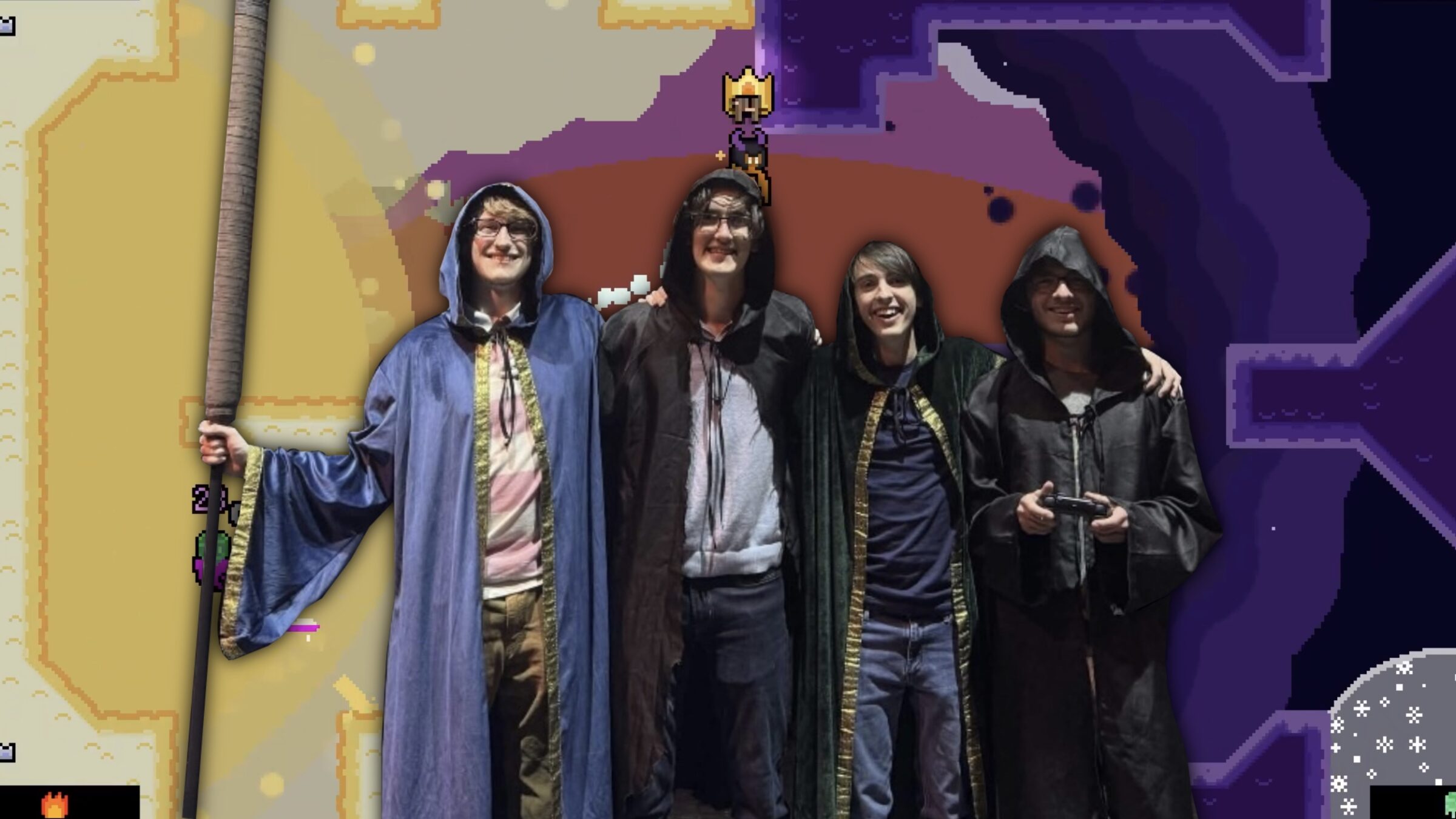
On June 23, the Steam community will get a highly anticipated 2–4 player projectile-firing party game called MAGE: Mega Awesome Gregarious Encounters. With more than 1,900 demo downloads, more than 900 Wishlist adds, and a coveted spot on their NextFest lineup. It’s hard to imagine that such a polished game came from the third floor of McDonald Hall, during the first week of classes, from a group of first-year roommates.
What started out as a simple “What if?” will soon reach a huge milestone for anyone looking to break into the industry. And the team behind MAGE — Game Programming and Game Design double major Benjamin Adams ’28, Game Design major Harry Tomasco ’28, Game Programming major Alex Weiswasser ’28, and Game Design major Maxwell Totten ’27 — go by something more formal than just “roommates” or “friends” these days. They’re now their own LLC and fledgling indie studio: FunRug Studio LLC.
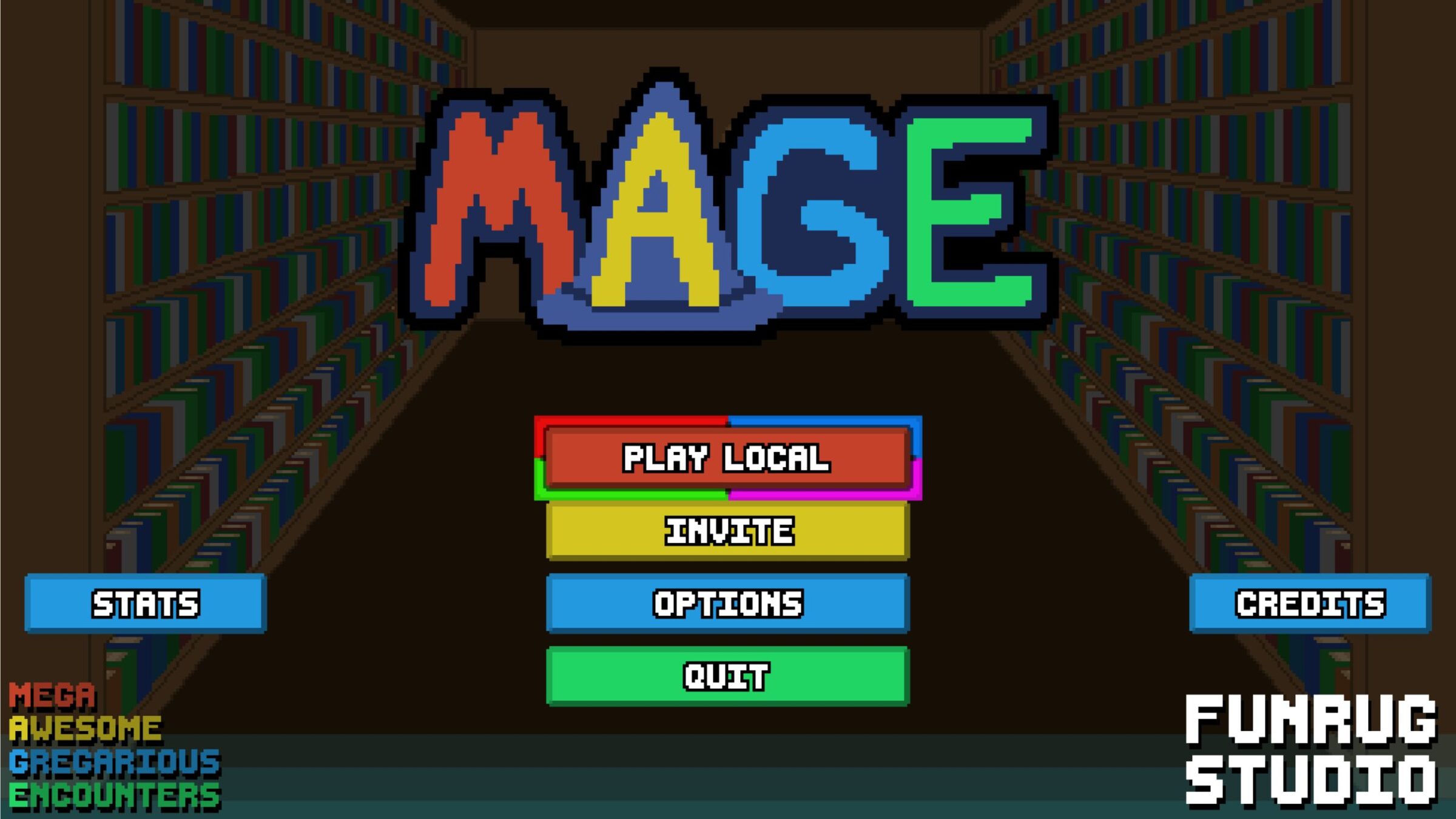
The Magic of MAGE
The 2–4 player online or couch co-op fighting game gets its name from the selection of wizard-like characters that players choose from to be their fighter. The catch is that players only have three control buttons to battle it out with: a jump/movement button, a shoot button, a counterspell button and the joystick to aim. The controls are deceivingly simple, but the skill ceiling is high.
Players have their option of 21 mages, all of whom have different kits and ways of modifying the controls. Some options include Dark Mage, where players must spin their joystick quickly in a circle to recharge their shot, or Bug Mage, who has a creature named “Buggy” who fires alongside them. Other mages move faster but shoot lighter, and others have boomerangs. They designed the kits across a variety of styles, giving players plenty of options to find their perfect mage match.
“Everyone has a favorite Mage,” Tomasco explained, “Every time we bring the game to testing, it’s great to hear that nobody can come to a clear conclusion as to who the best Mage is.”
Similar to games like Towerfall and Boomerang-Fu, it’s a quick game that’s perfect to pull out with a group of friends and sink a couple of hours into during your next game night.

Mega Awesome Origin Story
Adams, Weiswasser and Tomasco all bonded over their mutual love of video games. While getting acquainted, they passed around the flash game: Last Legacy: Null Space, a simple, quick in-browser game. What hooked them about the game was its level-creation system where they designed their own levels and made challenges for each other to play.
That’s when Tomasco had a realization: why would they use a preexisting level maker when they can just make their own? Weiswasser designed an initial system, and the control gimmick was simple: players moved and blocked with the same button, but blocked in the direction they were pointed and moved in the opposite direction.
The scope of the system grew when the three roommates put their heads together around a philosophy Weiswasser posed: if they created characters they had fun playing, chances are that others would find enjoyment in them, too. They sat in a circle, tossing a bean bag around to each other, when they finally came up with MAGE.
Within a week of meeting, they began working on the first of many iterations of the MAGE we know today. The project may have stalled and started twice before their sophomore year, but eventually they settled into a design that gave them something to seriously build on.
The Quest for the Fourth Developer
Demos and play testing began when they brought their idea to a friend at Hearthlight Club, Max Totten.
“I remember seeing the first MAGE, and thought ‘Okay, this is cool, I see the fun here,’ but playing the later, more modern MAGE, I had an ‘Oh my God’ moment; this was what MAGE was going to be,” Totten recalls. “I told them you need to make this.”
Totten’s excitement was a huge source of motivation for the three to move MAGE past its initial concept and turn it into a serious long-term project. What sealed the deal was an opportunity that arose while participating at ChampJam, an annual game jam at Champlain that challenges students to craft a game that reflects a designated theme within a short period of time.
There, Totten introduced the three of them to Game Design student Adam Siegel ’27, who hosts The Siegel Games — a popular mystery game tournament — each semester with Totten’s help. “We had been to one Siegel Games Tournament before, and thought it was super fun and amazing,” Tomasco noted, “We thought it would be so cool if MAGE was in the Siegel Games.”
Siegel gave them a deadline: if they were able to make a polished version of the game before the next Siegel games, then their game could be in it. That’s when the game went from a fun side project with friends to a large-scale game development project.
That winter, they officially recruited Totten, and the MAGE development team was born
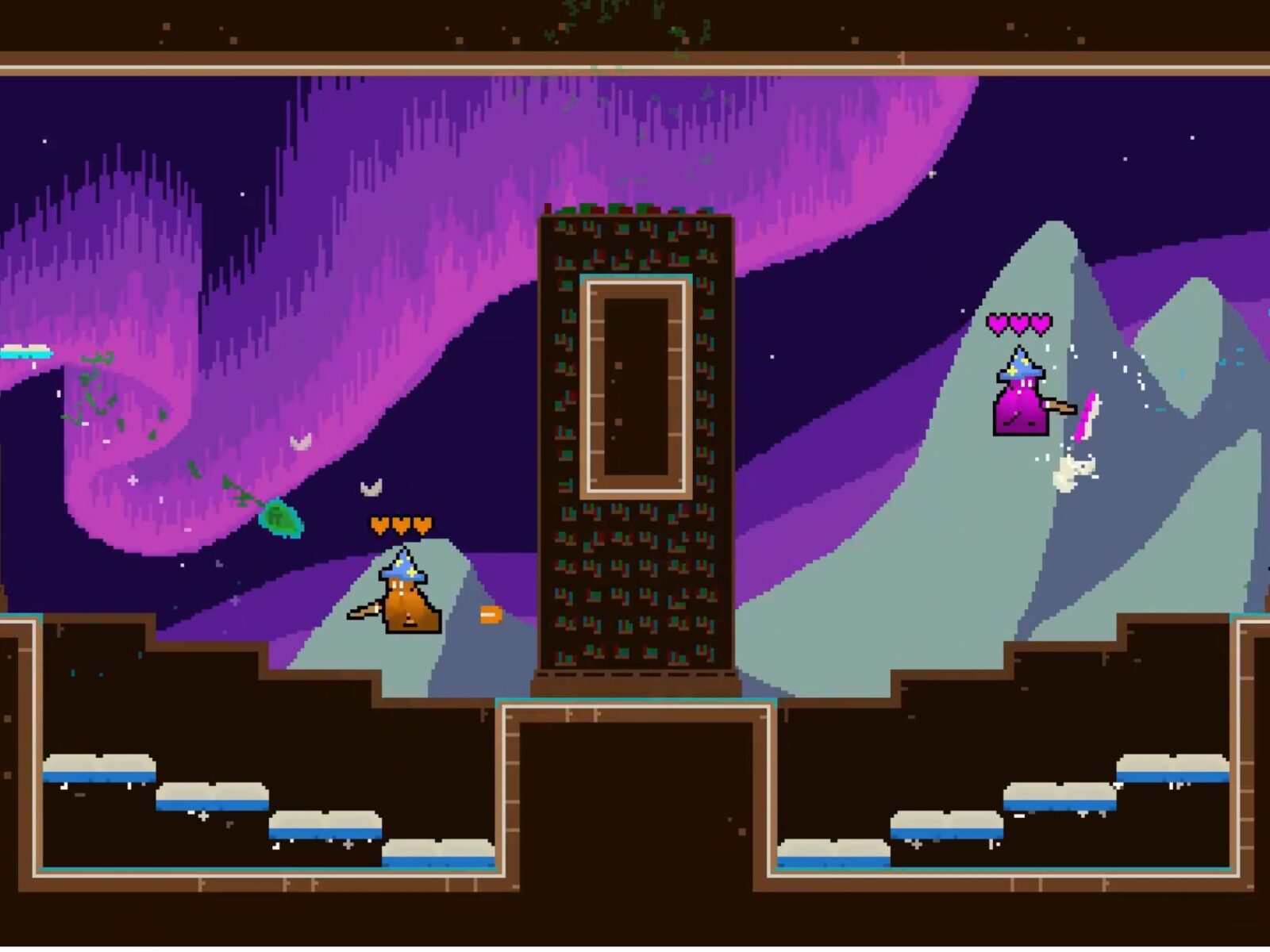
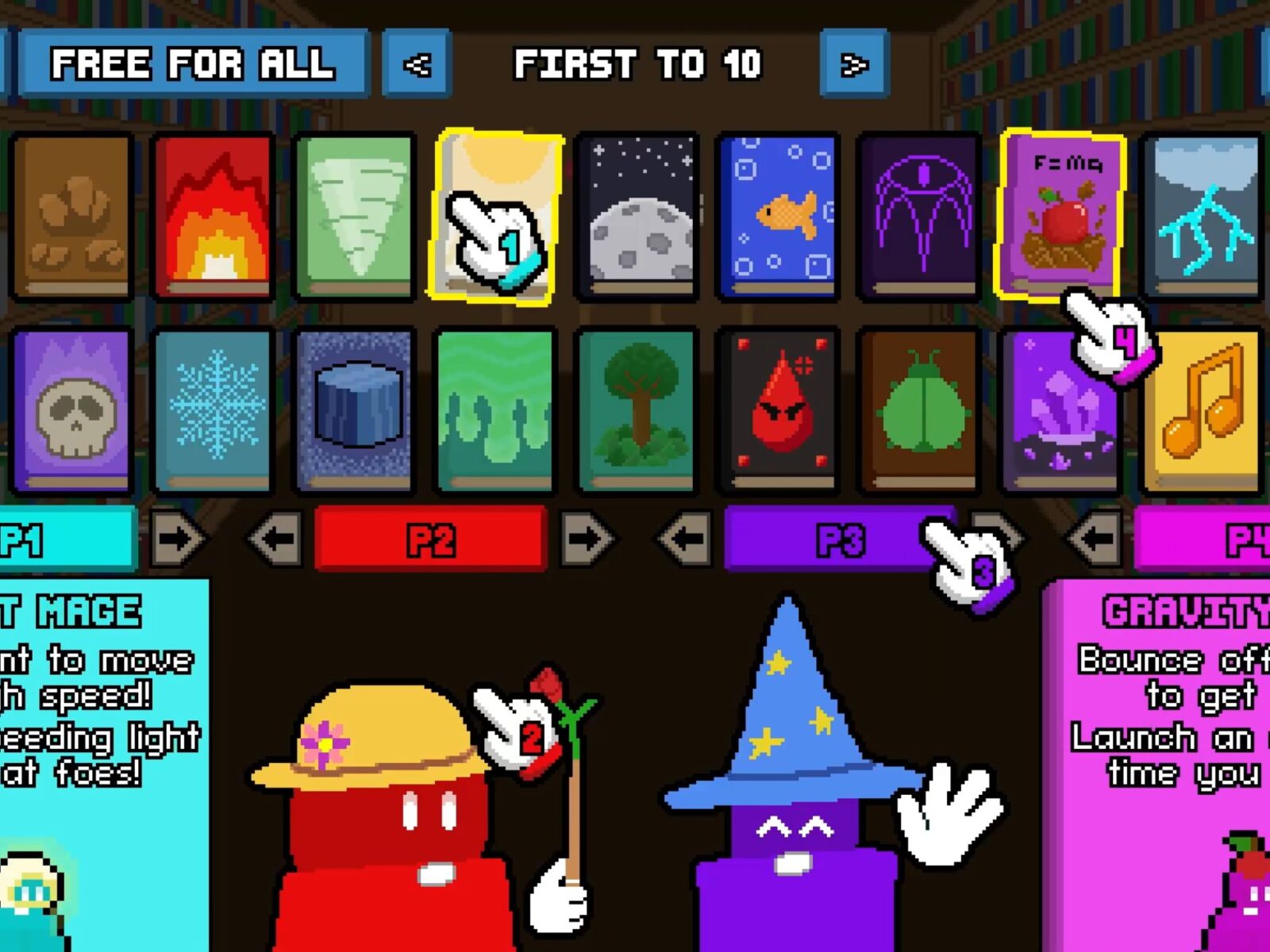
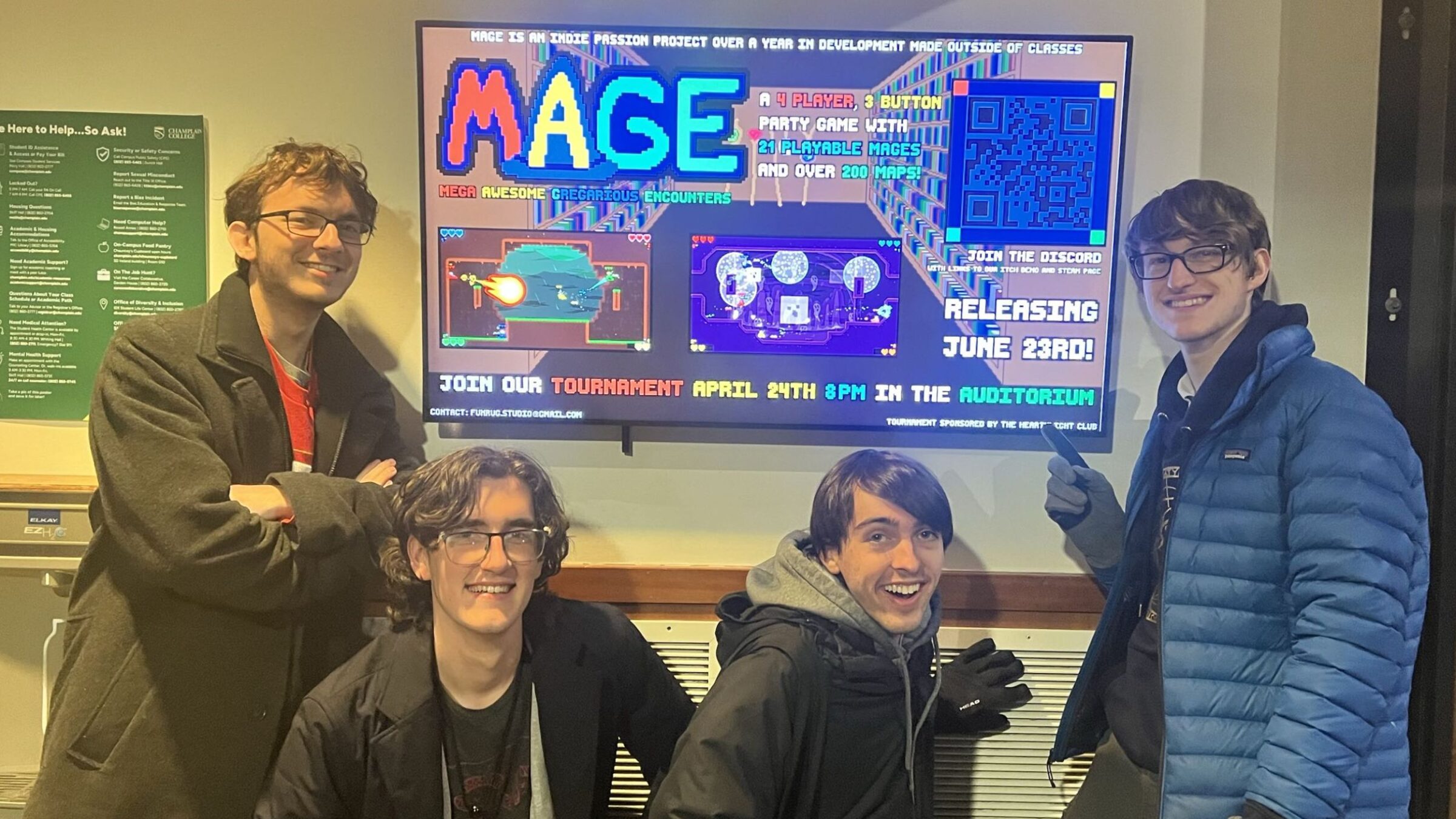
Left: Game play in MAGE. Right: MAGE character selection.
Meet FunRug Studio LLC
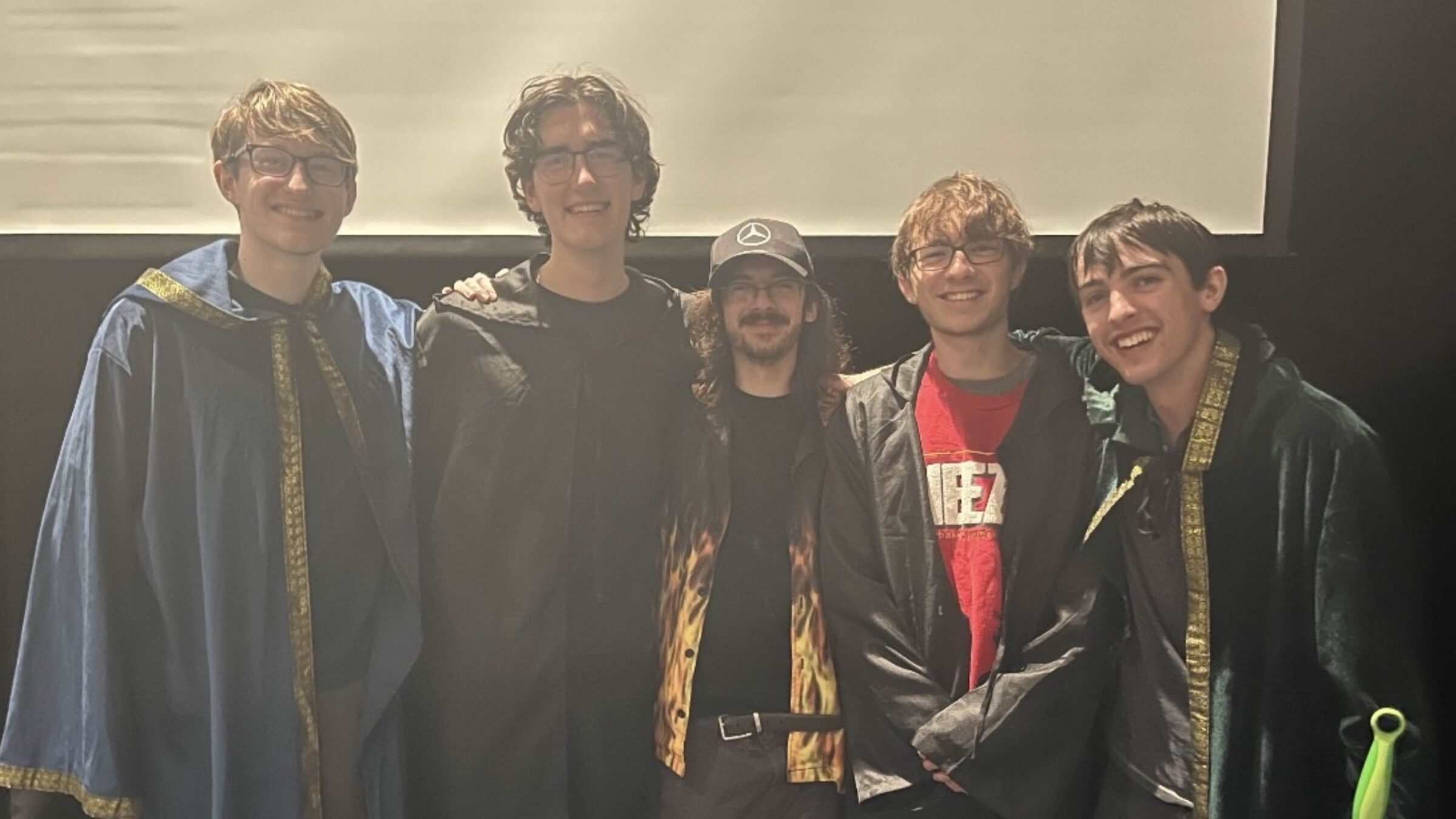
That winter, they formed an LLC for their fledgling indie studio: FunRug Studio. For them, officializing it was necessary not only from a business perspective to set up their Steam page, but also from a brand perspective — they had no plans of stopping after MAGE.
Over the next six months, development continued at a rapid pace. What started as four characters became a roster of 21 characters and over 200 maps. Each character was voiced by friends, family, or even supporters of the game (such as Siegel himself, who voices ‘Storm Mage’).
With advice from professors Robbie Wakefield, Dana Steinhoff, and Career Collaborative Coach Connor Holtkamp, they began marketing their game to a wider audience.
The team hosted regular meetings and settled into their different roles creating the game. This was also when the developers had a chance to expand their development skills.
“I’ve gotten way more into game architecture than I thought I would,” Weiswasser explained. “Having solid game architecture where anyone can work from anywhere on it without creating new bugs is vital. It’s important to have architecture that makes every single person’s job easier.”
With guidance from Game Design student Matthew O’Neill ‘27, Adams picked up pixel art and updated all of the game sprites without any prior experience. He quickly became the lead artist on the team, creating 21 character portraits, the UI/UX design, and original art for each Steam Achievement.
Tomasco had a background in band and choir, but no experience in musical composition for a project like this. He stepped up and built the backing track that added in a new instrument in the game’s main theme for each mage selected during a round. What started as an experiment has since grown into something more: he’s now pursuing a minor in Game Sound Design, turning a passion he’s had since high school into a core part of this creative project.
Totten, who had never done marketing work before, also tried his hand at making regular clips, videos, and advertising pushes for the game. Since daily uploads of clips began, the game received 250 more wishlists.
MAGE Takes Off By Storm
Finally, the team met their production deadline. With a polished version of the game, they joined The Siegel Games, which was attended by around 90 students. That was their first introduction to Champlain’s community.
But they didn’t stop there. At the end of the semester, they hosted their own MAGE Tournament and participated in several game testing events around campus. People had their eyes on MAGE.
And Champlain wasn’t the only one noticing their game.
Dan Lowery and Jackie Shuler, both with Sony Interactive Entertainment and PlayStation Studios, took an interest in MAGE. Lowery took the team out to coffee and provided them with advice and insight on game and career development.
“For us, it meant a lot to get professional recognition for all the effort and hard work we’ve been putting into this. It was very motivating to hear the kind words they had to say,” Tomasco said.
The numbers add up: 900+ wishlists and 1900+ demo downloads (and counting!). MAGE is a product of passion, love, deep talent, and hard work from the four of them. And they aren’t planning on stopping there.
“FunRug Studio isn’t going anywhere. We’re going to make more games — MAGE is just one of many. We’re excited to continue production in the future,” said Tomasco.
How to Make the Next MAGE
Start Small
FunRug Studio attributes their success to the fact that MAGE is relatively small, but highly scalable. Form small teams, and have a game that you can iterate on.
Participate in Game Jams
During and prior to production, the MAGE team often participated in Game Jams, short contests that challenge teams to create a game based on a theme. While participating in ChampJam, they were able to network with Adam Siegel, and take MAGE to the next level.
Don’t Burn Yourself Out
Take breaks, work on different projects, and don’t neglect your other work for side projects.
“It was really important to make sure I wanted to work on MAGE.” Adams stated, “If I was working on MAGE for a month straight without working on anything else, I wouldn’t feel the same.”
Just Do It
If you have an idea, get a small group together and do it. Don’t stop before you can finish it! See the project through until the end. The team behind MAGE spent a year developing prototypes before settling on one and making it an official project.
In the News!
MAGE team members were featured in their hometown newspapers, highlighting the launch of MAGE and FunRug, and their journey to becoming game majors at Champlain College.


Get More Info
Fill out the form!
Author