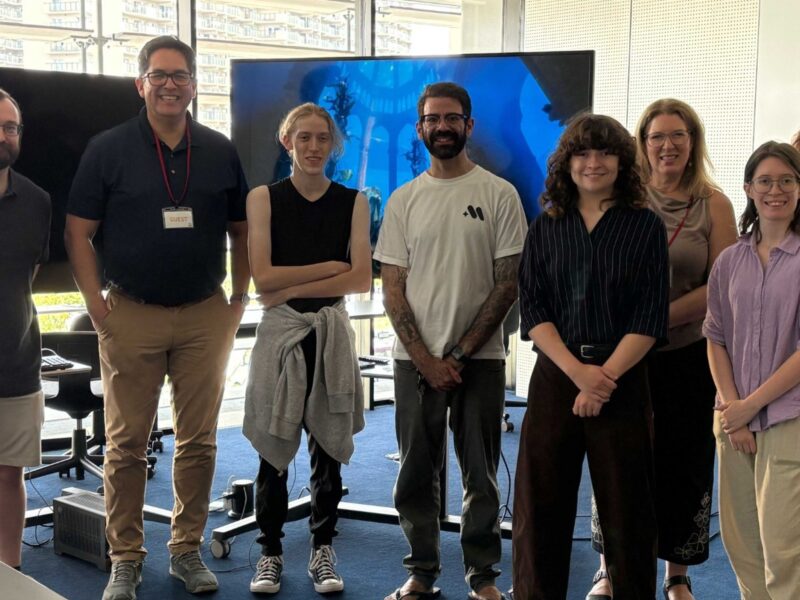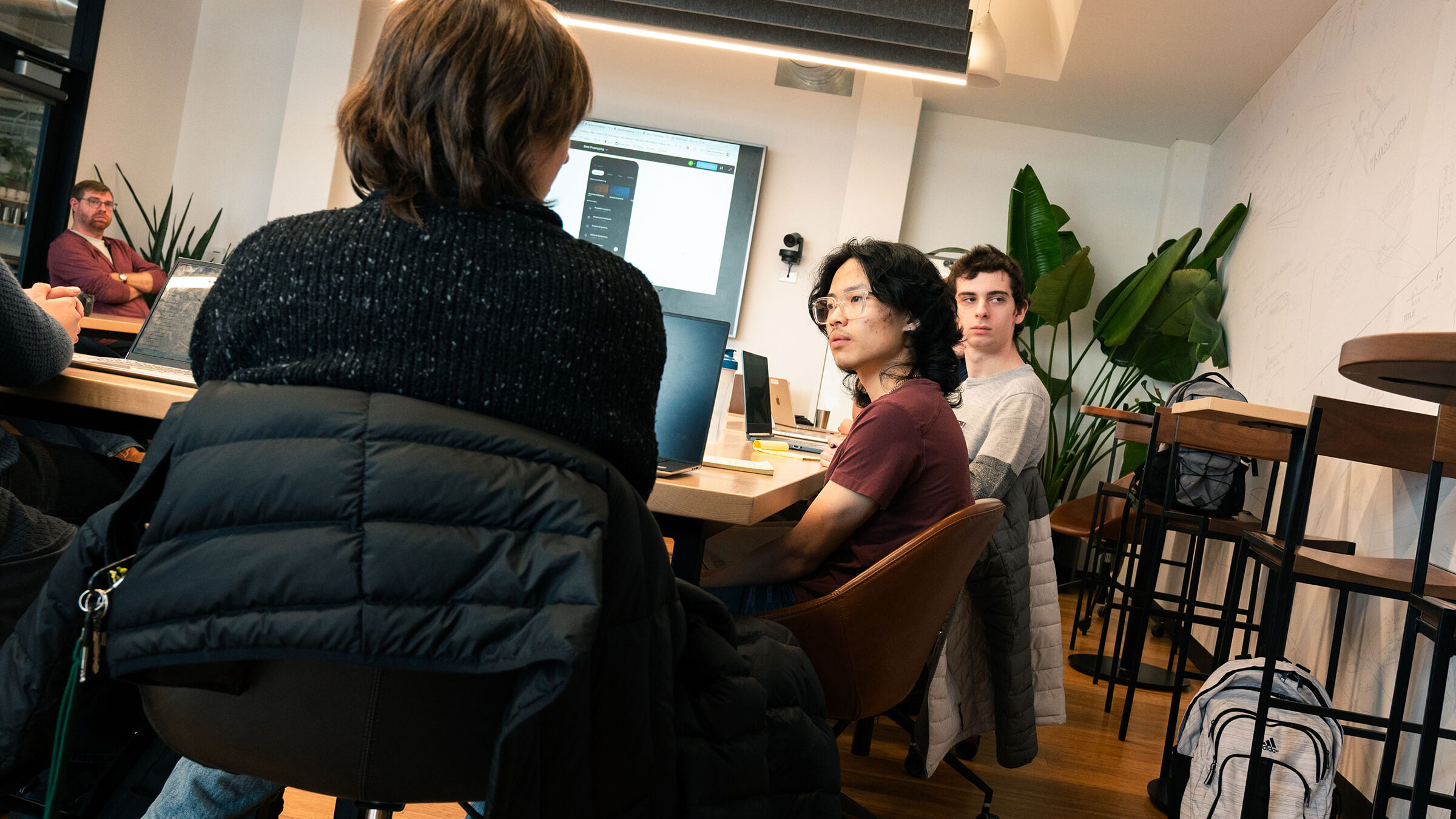
In January, Professor of Computer Science & Innovation Brian Hall opened his client/project-based Software Development Methodologies course with a very honest and blunt statement to his students: “I don’t know everything; you don’t know everything; now let’s build some software.” Fifteen weeks and five prototypes later, he and six of his students took their seats in a conference room at BETA Technologies, ready to present a semester’s worth of work to their client.
While the product they’re developing for BETA is impressive, this story isn’t about what the students are building. In fact, that part is pretty under wraps for the time being, but we can tell you it’s an internal knowledge-sharing and community-building app for BETA. Instead, this story is about how a room full of industry professionals, at one of the fastest-growing and most innovative companies in Vermont, described the students’ work and the way they work, without hesitation, as impressive.
Figuring it Out
BETA Technologies is a particular kind of Vermont business. The Burlington-based electric aerospace company has become one of the state’s most compelling growth stories — adding roughly 350 employees in just four months, with hundreds more expected by the end of 2026. As the company scales, building a culture around values and shared knowledge across the organization becomes increasingly important, and increasingly complex. That’s the challenge BETA brought to Champlain.
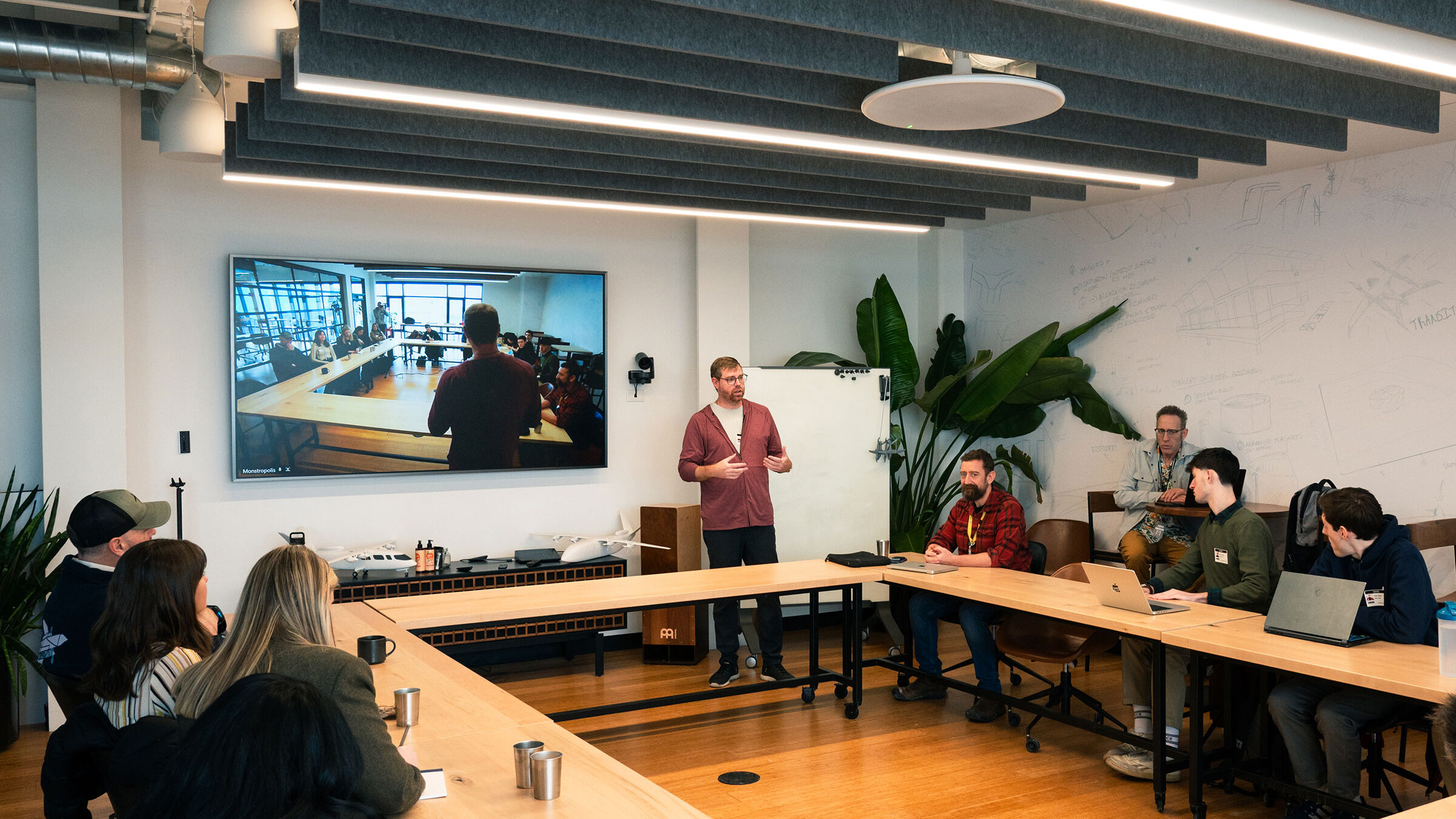
True to his opening statement, Hall taught his students the vocabulary and skills — rapid prototyping, Agile, test-driven development — and then stepped back, letting the workflow emerge the way it actually does in industry: organically, in response to what a real client actually needs and constantly changing industry standards.
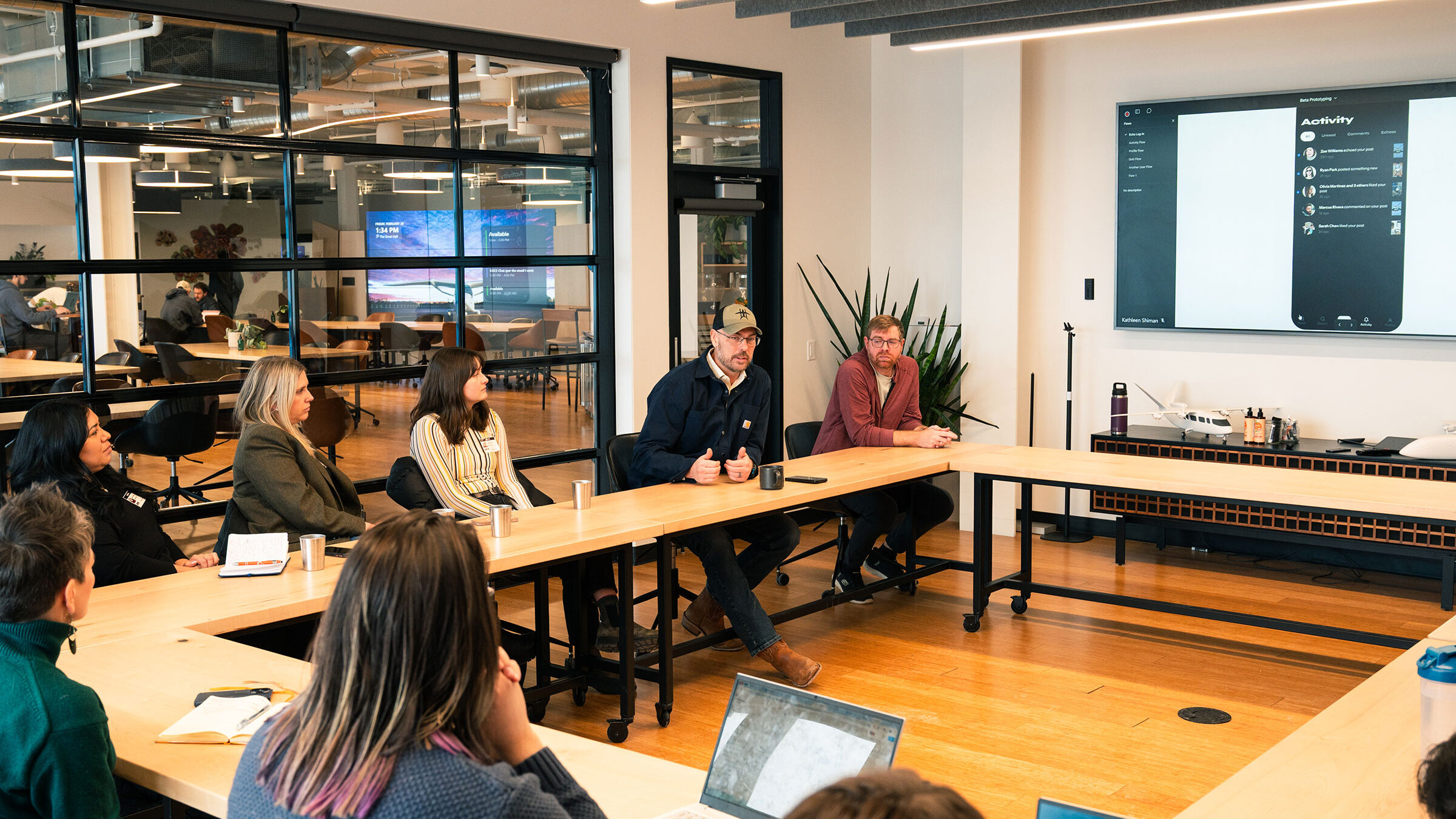
The six students — Alexander Cattani ’26, Nicole Amaral ’26, Ryan Buck ’27, Ryan Jackson ’26, Tyler Chasse ’26, and Andy Zheng ’27 — met with BETA advisors virtually and on-site throughout the semester, presenting new iterations of their work nearly every week. They’d then make adjustments based on feedback from real stakeholders — including from BETA’s CEO, Kyle Clark.
“I wanted them to self-navigate the conversations and work with BETA as a team in the moment,” Hall said. “They were going to learn way more with that approach — having team support, as a new employee would — instead of me constantly injecting my prior experiences. Discovery learning always sticks better than direct instruction.”
That meant some weeks looked nothing like what anyone had planned. “There were weeks where I was like, Yeah, we’re going to do this next week — and then we did something completely different,” Hall said. “Because the requirements changed. Because of client feedback. Or the process changed. Or AI’s influence changed what was possible.” From Hall’s perspective, none of these are setbacks. They’re what happens in the real world.
Beyond the Technical
Over fifteen weeks, the students didn’t just learn how to build software. They made judgment calls that don’t come with a rubric — decisions about scope, design, and what the product needed to be. One element of the app that’s nearly universal in consumer technology — so standard, most people never think to question it — the students decided to cut entirely. No vanity metrics such as likes and followers, but determining the merit of content in a different way.
“That was one of the design challenges we came across,” said Ryan Jackson, who led product management and architecture. “We wanted to get rid of those stereotypical components so the product had its own identity.”
Unlike typical college projects, the stakes for these students were real. And, working for one of Vermont’s most talented tech companies, the stakes were also very high. “Working with and reporting to a real client each week was extremely motivating,” said Tyler Chasse. “It pushed us to find ways to be more efficient — not only individually, but also as a team. The relationship with a client like BETA made this process much more involved and meaningful.”
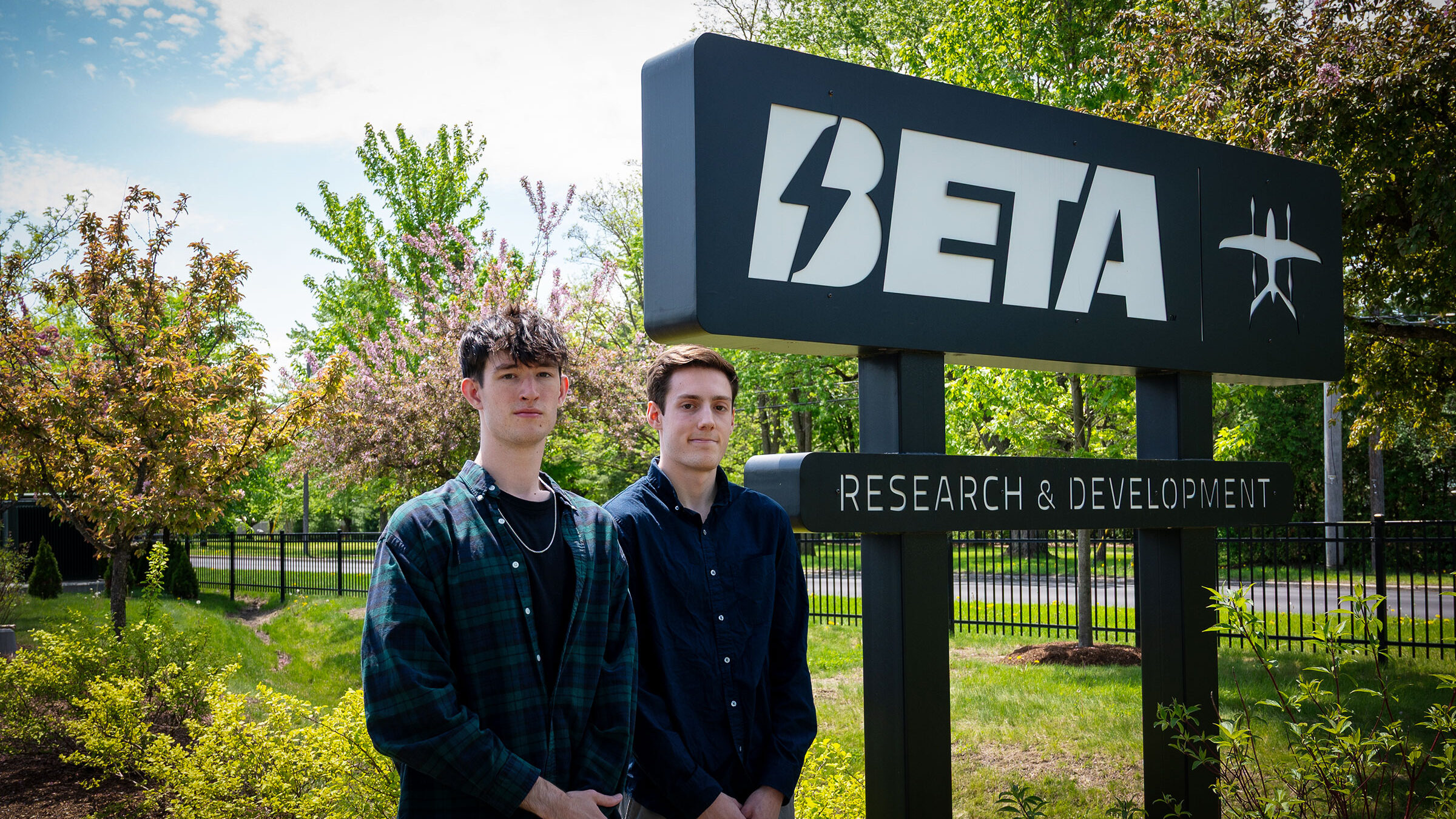
For three members of the team, that relationship is continuing beyond the final presentation. Andy Zheng, Ryan Jackson, and Tyler Chasse have all been offered internships at BETA this summer. “[BETA] had already learned so much about me from our weekly meetings and the work I’d done on this project — in much more depth than a resume could show,” Chasse said. After a conversation or two with BETA’s project leads and by proving himself to them over the course of the semester, Chasse was offered an internship.
Built to Last
BETA could have built this product themselves. They have the talent, the resources, and the engineers. The decision to involve students wasn’t about cutting corners — it was a deliberate investment in the community, and in the pipeline of talent they’re working to build over time. The two institutions announced a formal multi-year partnership this spring, one structured around real student contributions to active BETA initiatives.
“This isn’t a one-off,” said Adam Bouchard of BETA. “We expect it to evolve across cohorts, each class building on the last, until it becomes a production-level solution that fits our broader digital strategy. The work is meaningful. And so is the relationship with the community.”
Kyle Clark, BETA’s founder and CEO, echoed that: “We’ve already been so impressed and energized by the valuable, fresh perspectives of this cohort from Champlain, and we’re looking forward to seeing how our work on this initiative can evolve.”
Cut, Polish, Communicate
Back in the conference room, Hall’s six students distilled everything they’d built and learned into 27 clean, crisp slides. By the time they were done, one person in the room called it one of the best presentations he’d witnessed in his seven years at the company.
What struck employees at BETA wasn’t just the product, it was how the team of students worked and how they naturally gravitated toward a paired approach — two people on most tasks, two sets of eyes on most decisions — without being asked or told. When one person ran out of words mid-explanation, another picked up the thread.
Even BETA’s Chief Information Officer, Blain Newton, noticed. “Every conversation we had, I remember each of you calling on a partner to carry the conversation into the next topic,” he said. “That ego-less knowledge sharing is exactly what great software development looks like.”
After every meeting with BETA, students followed a standing rule: remove one thing, refine one thing, or change one thing. “Cut, polish, cut, polish,” said Andy Zheng. “And I’m glad we did that.”
In the end, their communication held everything together when the stakes were high. As one student put it in their end-of-semester survey, “No amount of good code fixes a team that is not talking to each other.”


Looking for More Info?
Fill out the form!