Public Policy Degree
Vermont is your living laboratory. Champlain teaches you to make change visible through prototypes, maps, and real community partnerships.
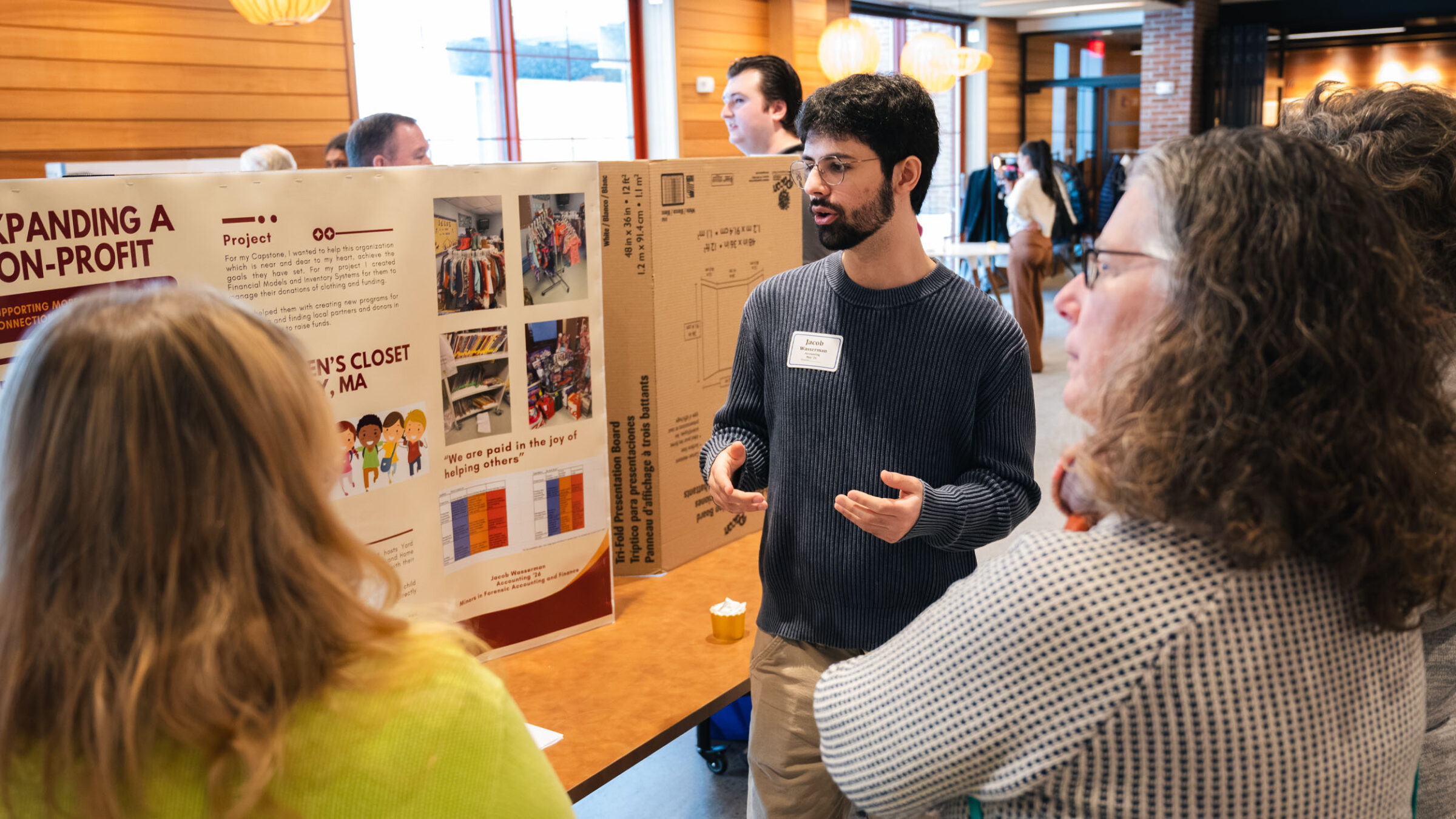
Don’t Just Study Change. Make It.
Most public policy programs teach you to write reports, argue positions, or draft bills. Champlain’s Public Policy BA goes one step further: it addresses the need to make new policies and changes visible and understandable to the people affected.
-
What is Policy?
Policy is a set of rules, guidelines, or principles that governments, organizations, and institutions use to guide decisions and achieve goals. Policies take many forms, such as laws, regulations, budgets, and official positions. They operate at every level, from a school’s code of conduct or a company’s rules on paid time off, to state and national legislation and international treaties and agreements.
-
What is Legible Policy?
Legible Policy is the idea that policy change should be visible and understandable to people most affected by those decisions. Instead of writing a report or arguing positions on the housing shortage, you might build a map of the neighborhoods hit hardest by these issues or design a dashboard that connects housing costs to commute times. Legible Policy means making a policy argument that anyone, not just policymakers, can see, make sense of, and take a stand on.
-
What is Policy+?
Whether it’s tech, business, healthcare, media, or design, every industry has regulations and guidelines. With that in mind, we developed a series of courses called Policy+ to help you pair policy principles with any other Champlain program, so you graduate understanding both the technical skills of your field and the policy environment that shapes it. Studying cybersecurity? Add Policy+ and learn how data privacy laws influence the security landscape. Into business? Explore how tax policy, labor law, and environmental regulation affect corporate decision-making.
-
Why Study Public Policy at Champlain?
At Champlain, you’ll learn to connect local action to global issues through our legible policy framework, using Vermont as a testing ground to understand how it plays out in the real world. And because Champlain builds 30 flexible credits into every program, our Public Policy BA gives you the freedom to explore and apply your degree to other disciplines, so you graduate with an understanding of how both your field works and is regulated by power systems behind it.

Different By Design
Vermont is Your Lab
Burlington’s history of direct democratic governance, Vermont’s location on the US-Canada border, and its rural-urban dynamics make it one of the most interesting and impactful places to learn and build public policy skills that you can apply anywhere, in communities or industries, locally and globally.
Design-Based Degree
Our curriculum is centered on design-based solutions — maps, prototypes, data visualizations, community projects — that people can see and understand, rather than the abstract theories and report writing typical of most public policy programs.
Applicable in Any Industry
Policy+ lets you pair public policy with another professional field like cybersecurity, business, game design, education, and more, so you’ll graduate understanding how that industry works and the policy environment shaping its future.
Flexible Credits
With Champlain’s 30 flexible credits — a full year of coursework — you can customize your Public Policy degree and pair it with whatever or wherever your curiosity leads you.
Facts & Stats
of graduates from the Class of 2025 were employed or continuing their education six months post-graduation.
The Fiske Guide to Colleges 2026 named Champlain College among the 300 “best and most interesting” colleges in the U.S., Canada, Great Britain and Ireland.
Sample Courses in the Public Policy Degree

Seamless Transition to Grad School
Thinking about going to graduate school? Champlain College Online’s Master of Public Administration (MPA) program is a direct next step, and you can even get a head start. Use your electives to earn a Graduate Certificate in Public Administration as an undergrad, leaving just seven classes to complete for your MPA after graduation.
Pathways from Bachelor's to Master's Degree
Add Policy+ to Any Major
From cybersecurity to social work, every company, industry, and government relies on policies to create shared understandings and clear guidelines. Policy+ provides a clear path for you to explore legible policy in the context of any major at Champlain. Policy+ is a series of curated courses designed to help you stack public policy skills and apply them directly to your field.

Career Possibilities
What jobs can I get with a Public Policy degree?
A Public Policy degree opens doors to positions in government, nonprofits, consulting, urban and regional planning, and advocacy work, including:
- Policy Analyst
- Community or Urban Planner
- Advocacy or Campaign Coordinator
- Nonprofit Program Manager
- Public Affairs Associate
- Legislative Aide
- Consultant
More Inside Public Policy Degree
-
Overview
Vermont is your living laboratory. Champlain teaches you to make change visible through prototypes, maps, and real community partnerships.
-
Curriculum
Champlain's Upside-Down Curriculum puts hands-on experience at the center of your public policy education, so you graduate ready, not just qualified. Built for students who want to make change visible — and the why behind it.
-
Learning Outcomes
Inspire change through visualization and action.