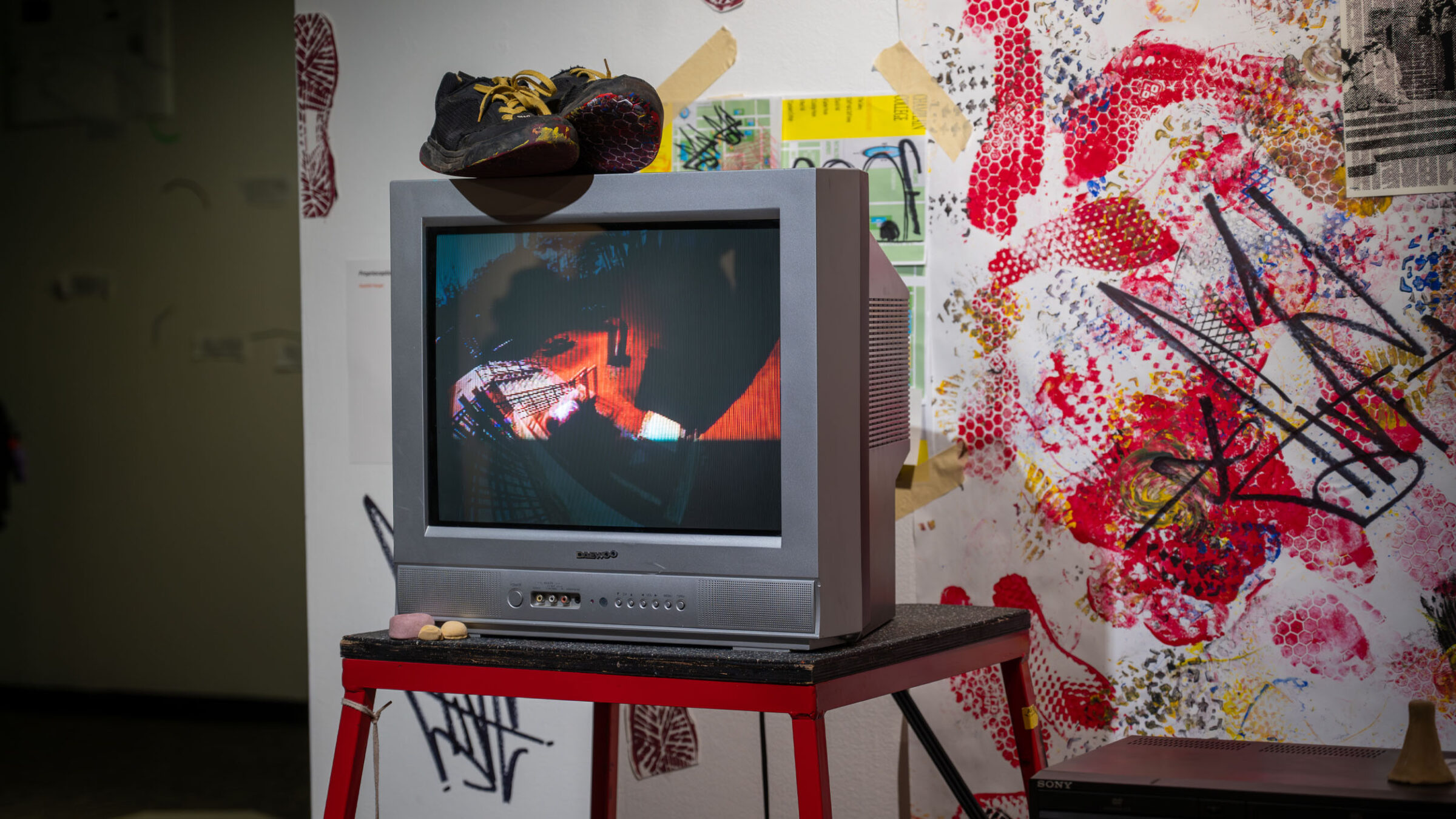
You’re a creative with big ideas — maybe you’re drawn to textured materials and drawing tools, or maybe you think in sound and visuals. Either way, mixed media art and multimedia art are two different paths for bringing those ideas to life. They might sound interchangeable, but they’re two distinct approaches.
In this article, we’ll break down the key differences between mixed media and multimedia art to help you discover which type of artist you are and find a path that follows your creative passions. Whether you work with your hands, a screen, or a mix of both — there’s a place for you.
Mixed Media Art vs Multimedia Art
What Is Mixed Media Art?
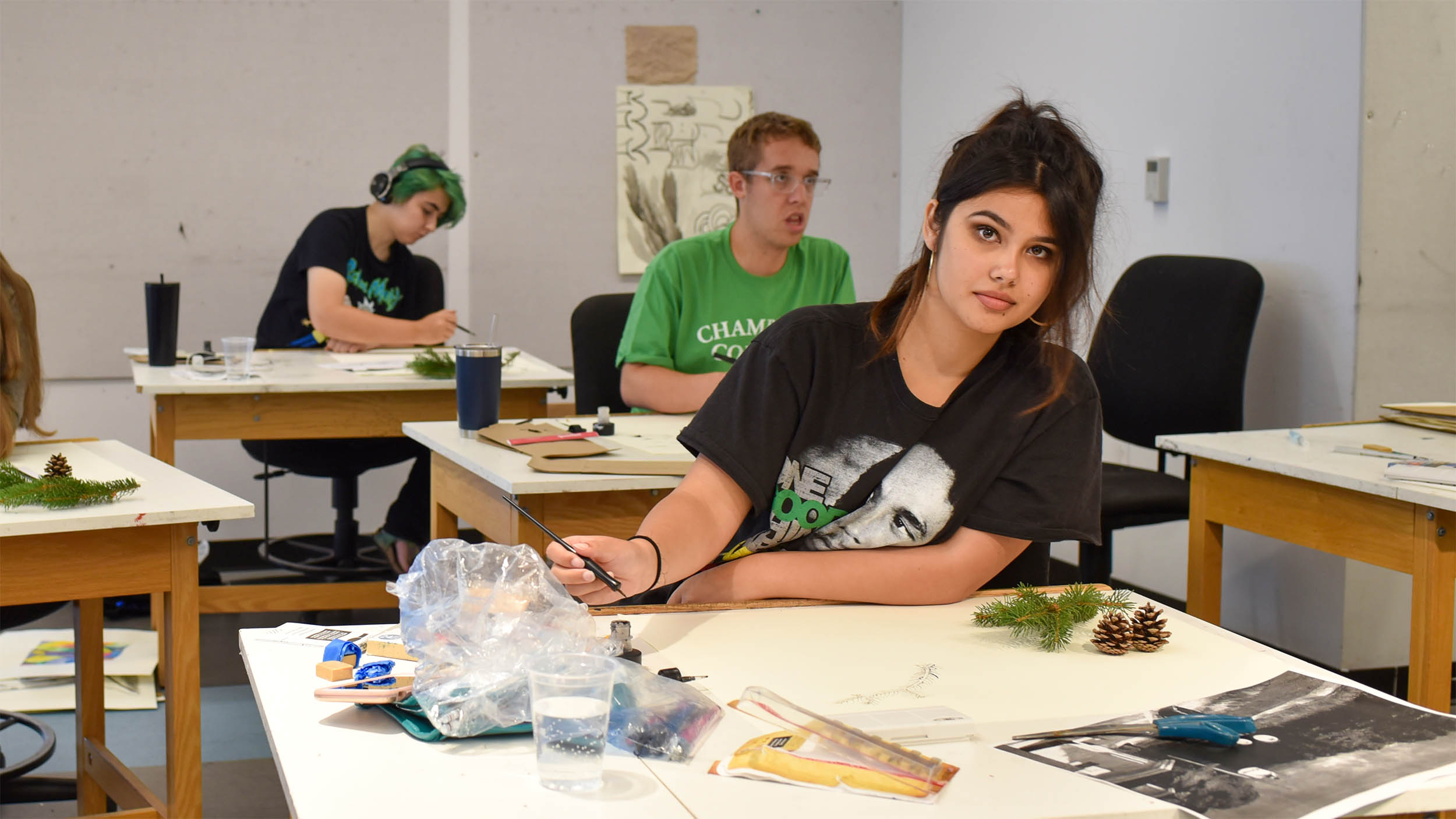
Mixed media art is a visual art form that combines different materials and mediums to create a single, unified piece. These pieces don’t follow a single set of rules — the term “mixed media” is intentionally broad, leaving plenty of room for diverse interpretations and approaches.
Mixed media art isn’t new. Artists have been combining materials for centuries, but it really took off in the early 1900s with artists like Picasso and Braque and movements like Cubism, Dadaism, and Pop Art — and it’s only expanded from there.
Some of the most popular examples of mixed media art today include:
- Collages: gluing or affixing photos, papers, and/or other materials in different arrangements
- Assemblages: a 3D version of the collage using materials such as metal, wood, and other found objects joined together
- Layering of wet and dry materials: combining both wet mediums (paint, ink, resin) and dry mediums (charcoal, pastels, graphite)
But mixed media can be more than a technique. For some artists, the goal is to transform objects that mean one thing when they stand alone into something else when they are together. After all, yarn is just yarn until it’s knitted into a scarf — and the same is true of any material you bring to the table.
The possibilities are truly endless, and the combinations are entirely up to your imagination and creative expression. What defines a piece as mixed media is the final result: if the finished artwork is a single, unified, tangible piece where a variety of materials coexist, it qualifies.
Common Mixed Media Materials
Almost anything qualifies as a material in mixed media. Don’t know where to start? Try these commonly used materials:
- Paints: acrylic, oil, watercolor, gouache
- Drawing tools: graphite, charcoal, ink pens, markers, crayons
- Collage elements: photographs, magazine clippings, fabric, tickets, maps, receipts
- Texture materials: modeling paste, gel mediums, sand, string, small found objects
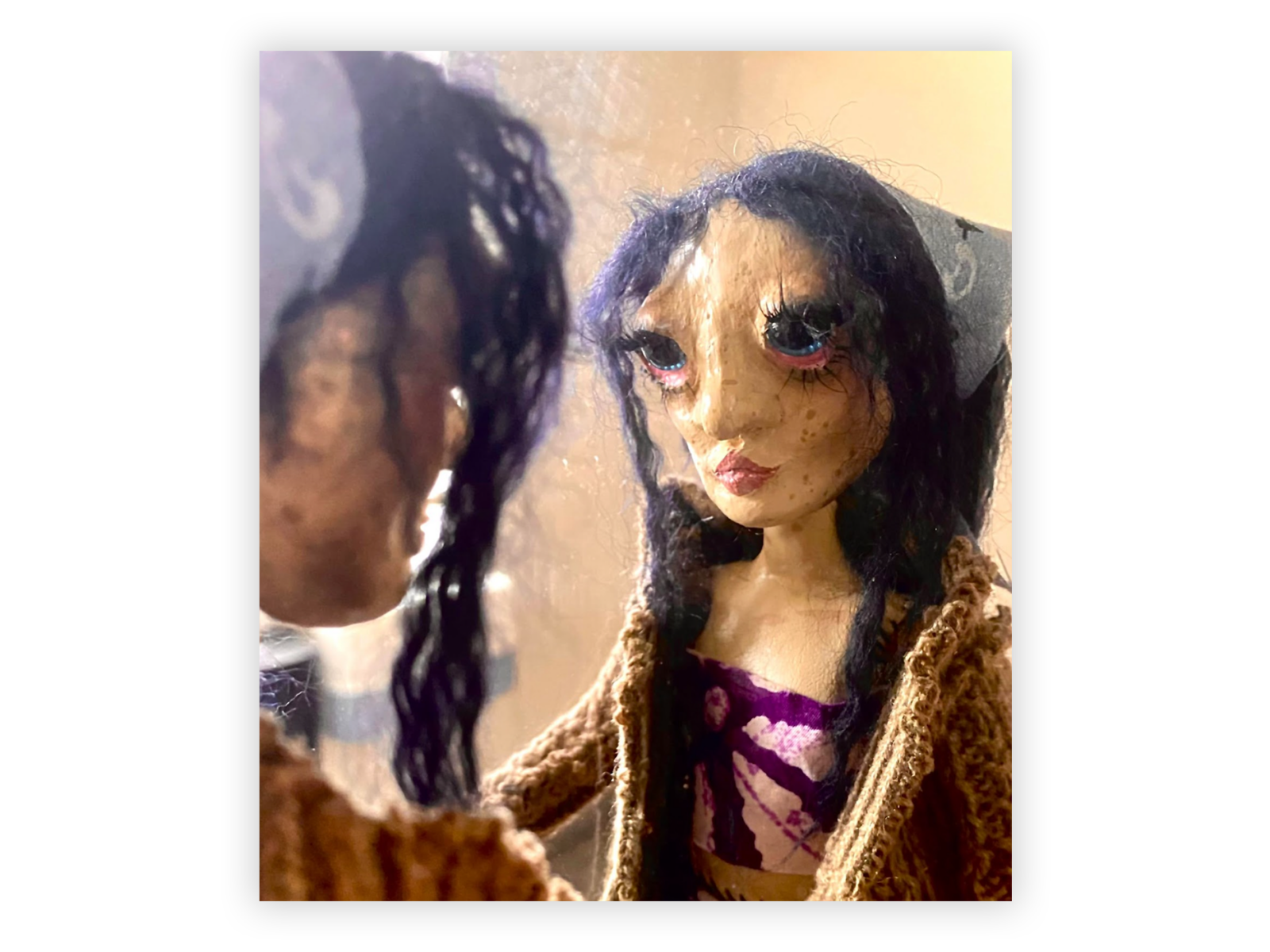
Everlong — Mixed Media Doll
“I wanted to exemplify that [mixed-media] process, highlighting the layers of material and stitching rather than hiding them, because to me the process is just as important as the finished project.” — Autumn Farmer // Creative Media
Learn more about EverlongWhy Create Mixed Media Artwork?
People choose mixed media art because it’s one of the freest ways to express creativity. It can mean recycling scrap materials, experimenting with texture, or combining hobbies like crochet and knitting with painting and printmaking. That receipt you saved from a trip, the old concert t-shirt in your closet, that physical ticket you kept from a show you really liked — on their own, they tell different stories and invoke specific memories, but together they have the potential to become something new entirely.
If you like working with your hands and can imagine what two completely different things could become together, mixed media might be a great outlet.
What Is Multimedia Art?
Like mixed media, multimedia art combines multiple elements to create a finished piece, but instead of using only physical materials like clay and paint, multimedia art uses sensory and digital elements such as sound, light, motion, and interactivity.
With these unique combinations and the freedom of expression, multimedia artists can create immersive experiences, convey emotion and story, and draw their audience into a world rather than simply showing them one.
Multimedia art traces its roots back to the 1960s and 70s when technology became more accessible to everyday consumers. Artist Bobb Goldsteinn was one of the first to coin the term “multimedia” to promote his upcoming show, which was a combination of lights, music, and visuals. Today, multimedia spans across immersive installations, augmented and virtual reality, web-based projects, and interactive environments.
Some of the most popular examples of modern multimedia art include:
- Interactive Installations: artwork that requires audience participation or responses like motion or sound sensors
- Digital multimedia collages and mash-ups: the combination of multiple images, texts, videos, and other assets using digital tools in 2D and 3D spaces
- Performance Art (with visuals): combining a live performance with background video or lighting effects
- Video art/ installations: the use of screens and or projections to create a looping visual or immersive experience
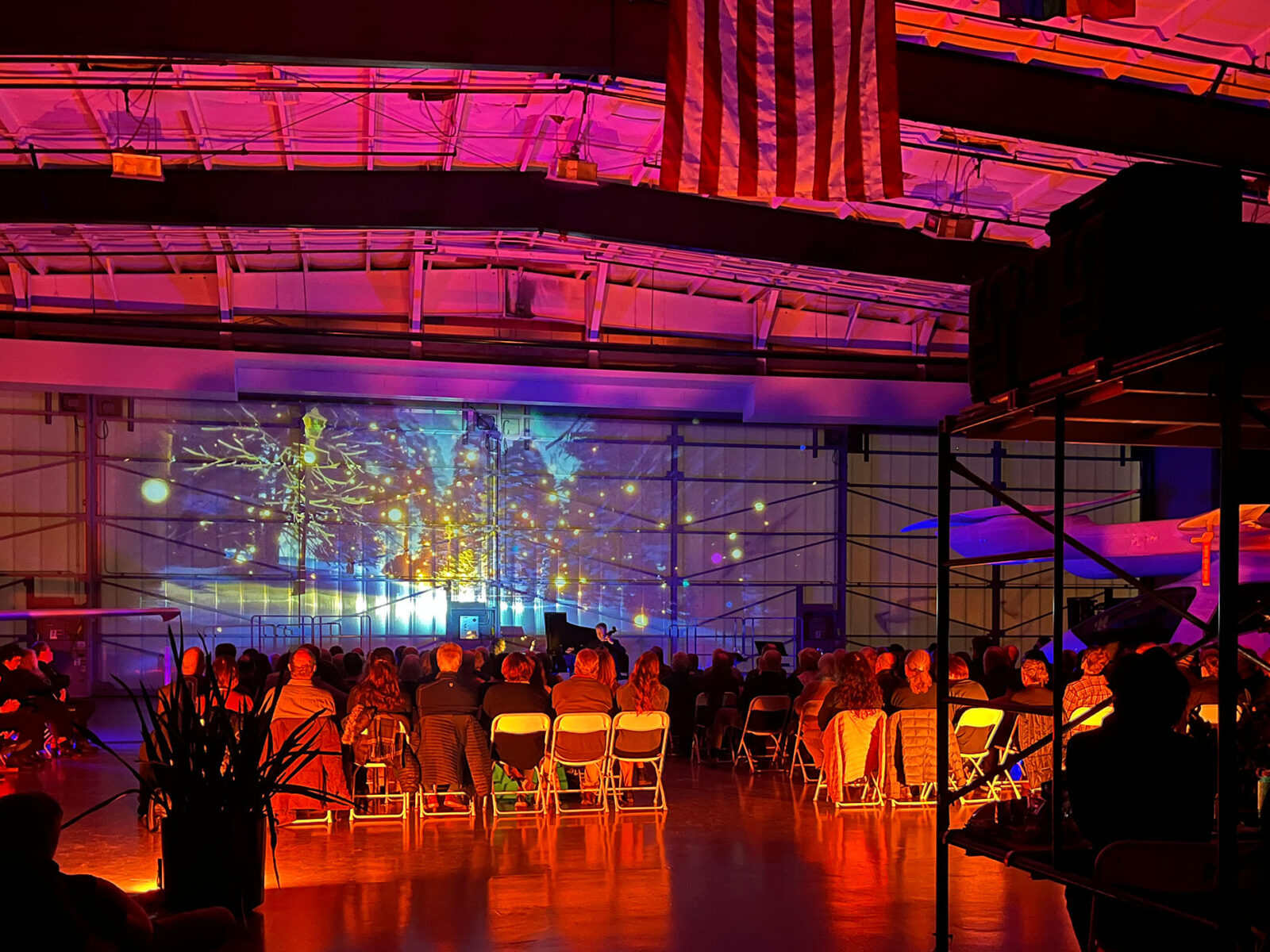
Beyond the Screen: Visual Magic Meets VSO Symphony
Champlain students have even incorporated multimedia work into a partnership with the Vermont Symphonic Orchestra and BETA Technologies.
Read more about the projectCommon Multimedia Materials
While this isn’t a comprehensive list, there are many tools you can work with to create something within the realm of multimedia:
- Audio: music, recordings, sound effects, narration
- Text & visuals: infographics, images, typography, graphics
- Video: animations, motion graphics, video recordings/clips, screen recordings
- Interactive elements: games, interactive websites, augmented reality (AR), and virtual reality (VR) simulations
The best way to find your footing in multimedia is to start somewhere — anywhere — and see where it takes you.
Don’t know where to source these materials?
Check out free and paid digital libraries like Pixabay, Foley sound, Adobe Stock, Creative Commons, or Unsplash.
Note: Be sure to follow copyright and licensing restrictions for each asset before use!
Why Create Multimedia Artwork?
Similar to mixed media, multimedia art is a wonderful way to express creativity while breaking traditional rules and artistic boundaries. Technology offers vast opportunities for new and unique ways to integrate digital tools into physical and virtual creations — and you don’t need expensive equipment or software to create something. A basic camera or smartphone can capture video and sound, free tools like iMovie or Audacity can handle editing, and free or paid creative software like Blender (free) and Adobe products (paid) make digital art and 3D modeling more accessible than ever.
If you like working with layers of sound, motion, and story, and are interested in having your audience explore or interact with your work, multimedia might be right up your alley.
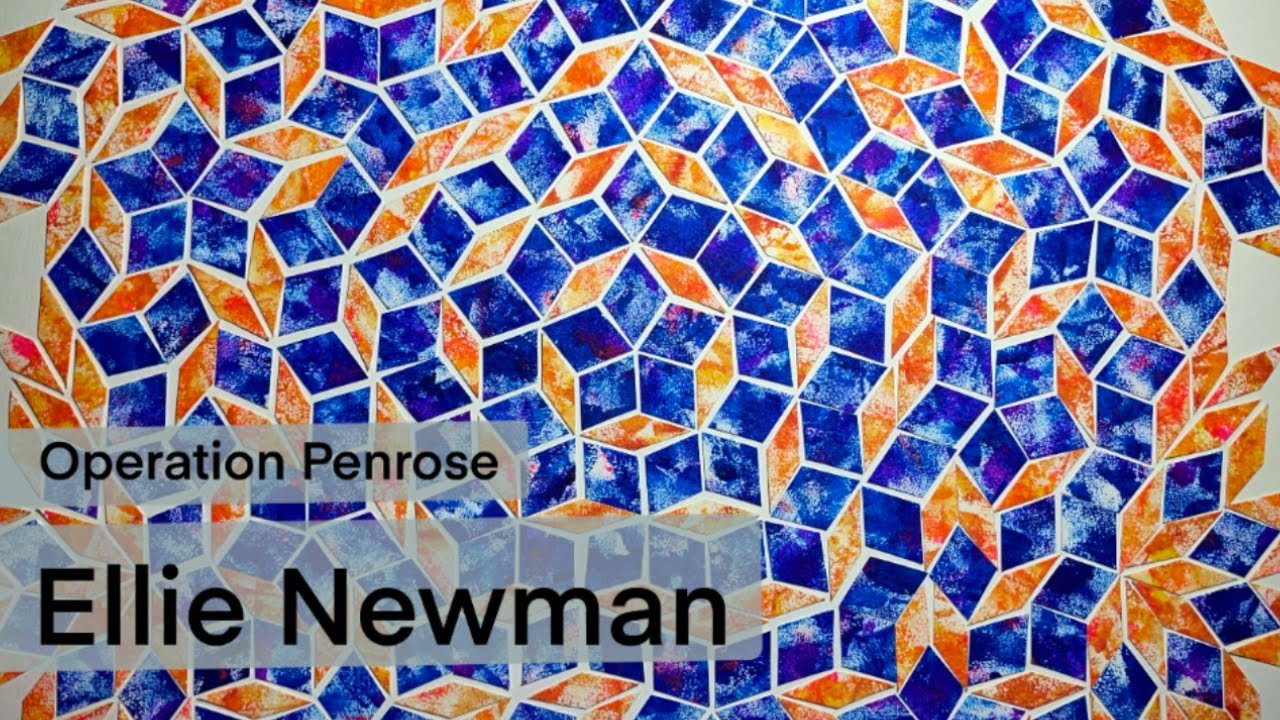
Operation Penrose — Interactive Web Experience
“Math and art seem to be worlds apart at first, but really, both are just ways of interpreting the universe we live in.” — Ellie Newman // Creative Media
Learn more About Operation PenroseDifferences Between Mixed Media and Multimedia Art
Both mixed media and multimedia involve combining elements, but they use different tools and skill sets to create different kinds of visual and sensory experiences. Understanding the fundamental differences can help you decide how you want people to connect with your work — do you want them to stand in front of something and feel it, or walk into something and experience it?
At its core, mixed media refers specifically to the different materials used to create visual art, while multimedia combines visual art with sensory elements such as sound, light, motion, or interactivity.
The main differences come down to two key areas: what you combine and how it’s meant to be experienced:
- Mixed Media: the hands-on, material-based approach
- Built from physical materials like paint, paper, fabric, and found objects, and layered into a single, tangible piece
- Experienced visually and tactilely — the audience observes and engages with a physical object
- Multimedia: the immersive, experience-based approach
- Pulls from a broader toolkit of video, audio, performance, projection, and sensors to build something that engages more than just your eyes
- Experienced as something you enter rather than encounter — the work surrounds, responds to, or unfolds around its audience and immerses them in it
Understanding the distinction also helps you communicate about your work — whether you’re talking to classmates, curators, or professional clients. And when you’re studying art, you’ll have the opportunity to try out different approaches firsthand, which is often the best way to figure out what feels most natural to you, even if it ends up being somewhere in between.
Why Choose One or the Other?
One of the best aspects of art is that you don’t need to choose a lane to stay in. Anything you create can draw on both mixed and multimedia elements, or blend in something else. For example, a book nook with LEDs that are sound and motion-activated uses both mixed media and multimedia elements simultaneously. This hybridity opens the door to tons of creative possibilities.
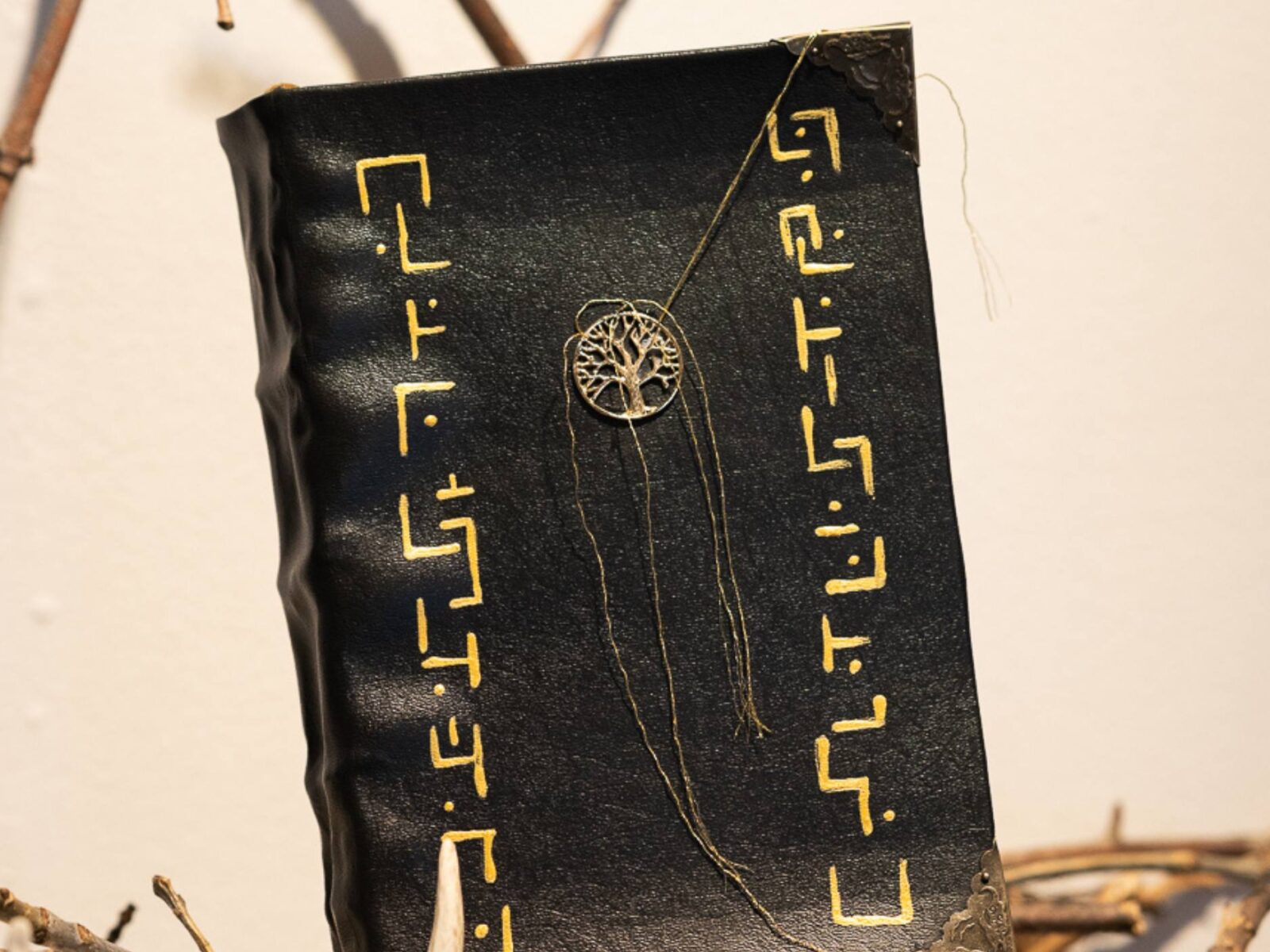
Woven Thread — A Transmedia Dark Fantasy Novella
“Compiled in a hand-bound book and paired with audio, Woven Thread spins first-person tales of many lives cut short into an overarching story rooted in Norse mythology’s belief in fate lines.” — Danni Petrilak // Creative Media
Learn more about Woven Thread
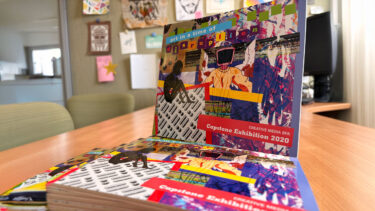

What Type of Artist Might You Be?
Art isn’t one-size-fits-all. And neither is how you experience it — or what draws you to create in the first place. You might be the type of person who likes working with your hands, layering paint, screen-printing, or sculpting physical pieces. Maybe you’re more at home in the digital space, working with animation, sound design, or motion graphics. Perhaps you enjoy a mix of both, or something else — there’s no wrong answer here, and no single direction you’re supposed to go.
The most important thing to keep in mind? None of these boxes is permanent; you can combine them, switch them, or ignore them entirely.
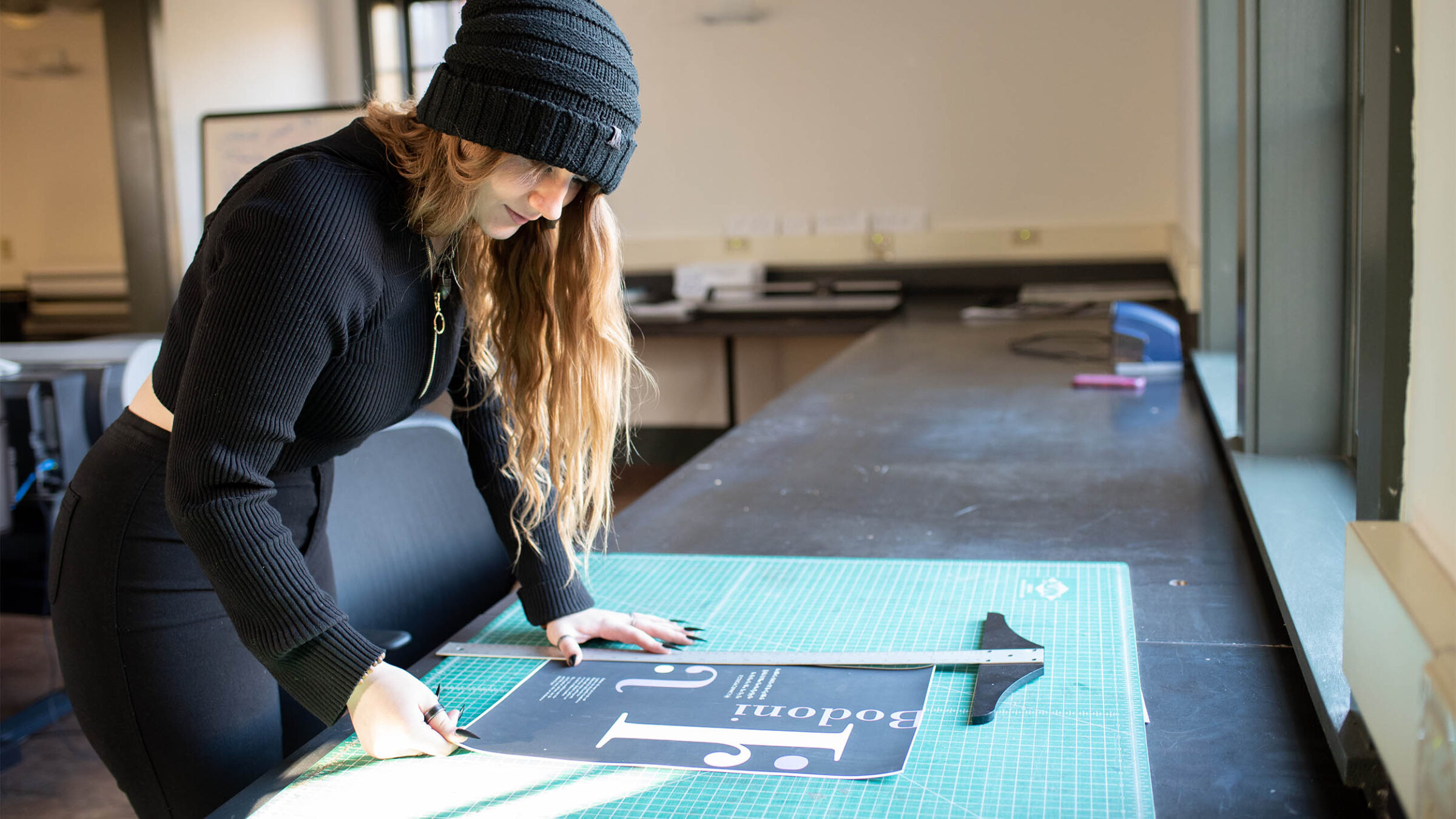
At Champlain, you don’t have to choose one type of art direction. In our Creative Media program, students choose from our six artistic disciplines — Visual Art and Design, Moving Image, Interaction Design, Creative Writing, Game Media, or Sonic Arts — and create a personalized education that aligns with their creative interests and career goals. Whatever type of artist you are, or are becoming, there’s a place for you here.
Frequently Asked Questions
What’s the difference between mixed media art and traditional art?
Traditional art generally uses a single medium, such as oil painting on canvas or charcoal drawing on paper. Mixed media art takes those same techniques and materials and combines and layers them with others to create something beyond the boundaries of a single medium.
Can mixed media include digital elements?
Yes — and this is where mixed media and multimedia can overlap. Mixed media can include both physical and digital elements, but the key distinction is the intent behind the piece. If the digital elements are being used as materials layered into a visual piece, it still leans toward mixed media. If they’re used to create a sensory or interactive experience, it becomes multimedia.
Do I have to choose between mixed media or multimedia?
Not at all. You can create a mix of both, bounce between the two, or do something else entirely. Art is subjective and open-ended. These labels exist to help you find your footing and provide a foundation for creating anything you want.
Why Study Creative Media at Champlain
Champlain College is here to help you build a creative identity that’s uniquely yours — whether you’re all-in on mixed media artwork, deep into multimedia, happily living in the hybrid zone where both worlds meet, or somewhere else entirely. By the time you graduate, you’ll have the skills and mindset to take your art to the next level, no matter what you want to do with it. Let us dare to create something new — together.
Looking for more information about Champlain College? Start here!
Fill out the form to receive helpful information!
All trademarks, service marks, trade names, and logos referenced in this article are the property of their respective owners. All company, product, and service names used in this article are for identification purposes only.