In the US, animation tends to get lumped into one box and dismissed as kids’ stuff. To some people, Wallace & Gromit, South Park, and Toy Story are all the same thing, despite looking completely different and being made in completely different ways. The truth is, animation is so much more than Saturday morning cartoons or Pixar films. Animation encompasses stop-motion, motion graphics, and hybrid styles that blur the lines between different animation art styles.
So whether you’re an animation enthusiast, a beginner artist finding your own style, or simply curious about what’s out there, this article will cover the animation styles you already know, introduce some you may never have heard of, and give you a clearer picture of just how vast animation is as an art form.
Different Animation Styles & Techniques
What Is Animation?
Animation is the art of making still images appear to move. When you show a bunch of slightly different images in quick sequence, our brains stitch them together, creating the illusion of movement. Animation can be hand-drawn, computer-generated, crafted from clay, or constructed from abstract shapes and motion graphics. And as you’ll see, there are more techniques and art styles animators have developed than most people realize.
Different Animation Styles & Techniques
From hand-drawn classics to CGI worlds, animation takes many forms. Here’s a breakdown of each and what makes them distinct.
Cel Animation (Traditional Animation)
Traditional animation, also known as cel animation, is a technique where each frame is drawn by hand. Artists draw characters on clear plastic sheets called cels, then place them over painted backgrounds. As beautiful as these animations are, it’s also painstaking, time-consuming work. However, this was the foundation animation was built on, and without it, we wouldn’t have Disney classics like Bambi or Cinderella. Traditional animation mostly fell out of fashion in the late ’90s and early 2000s, giving way to the newer techniques we’ll explore later. But its influence on the history of animation is worth noting.
Examples of Cel Animation:
- Sleeping Beauty
- Ghost in the Shell
- Snow White and the Seven Dwarfs
2D Animation
Two-dimensional animation, better known as 2D animation, is the art of creating movement in a flat, two-dimensional space. Like traditional animation, characters are drawn frame by frame. The key difference: 2D can be done by hand or digitally with software, and characters aren’t drawn on plastic cels. Today, most 2D animation is done digitally. Animators still draw characters, but instead of paper or cel sheets, they draw on screens or tablets, and software fills in the frames between them, smoothing out the motion automatically. This makes the animation process faster, without losing the flat, graphic quality that makes 2D so distinctive.
Examples of 2D Animation:
- The Simpsons
- Avatar: The Last Airbender
- Owl House
3D Animation
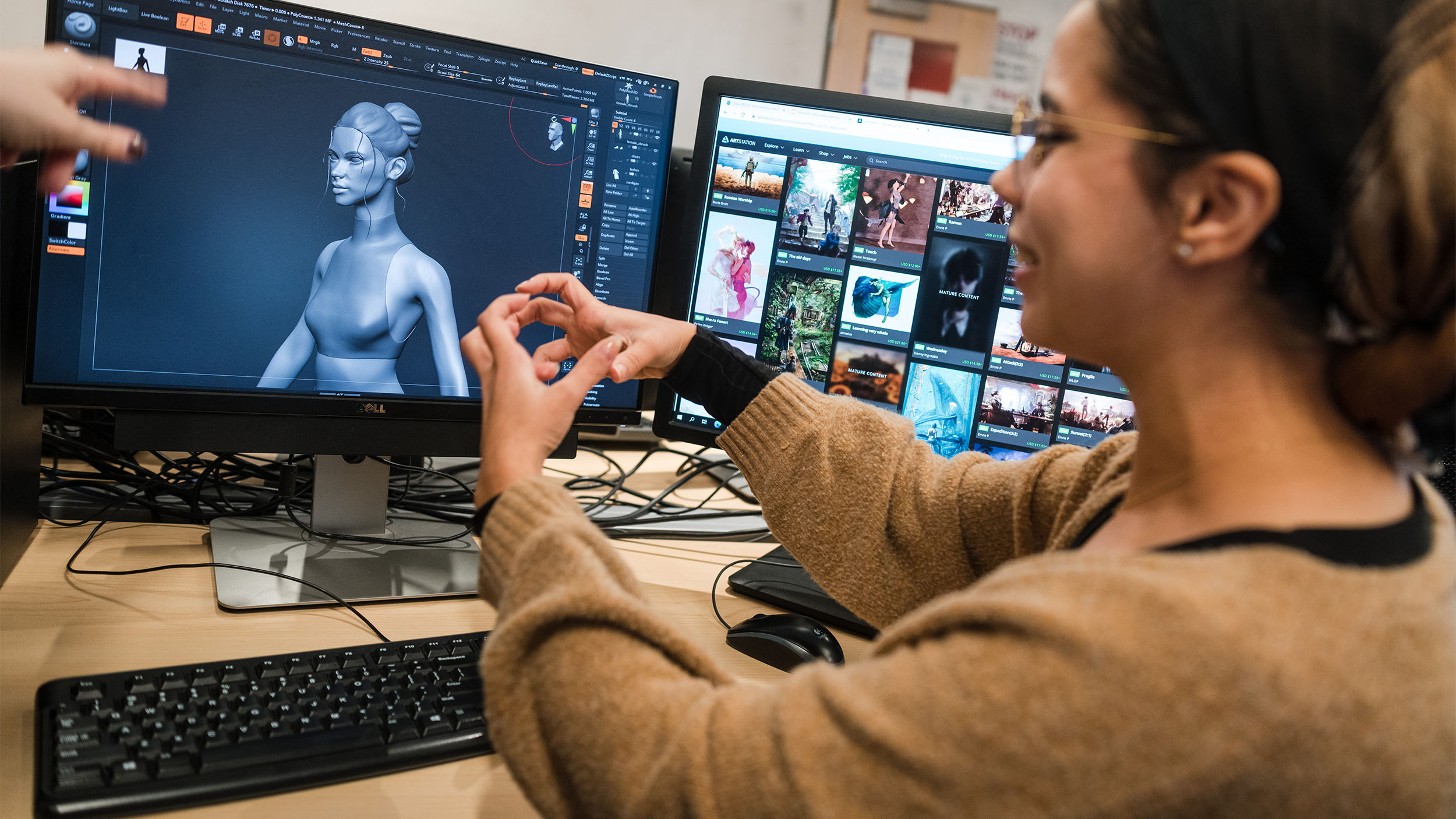
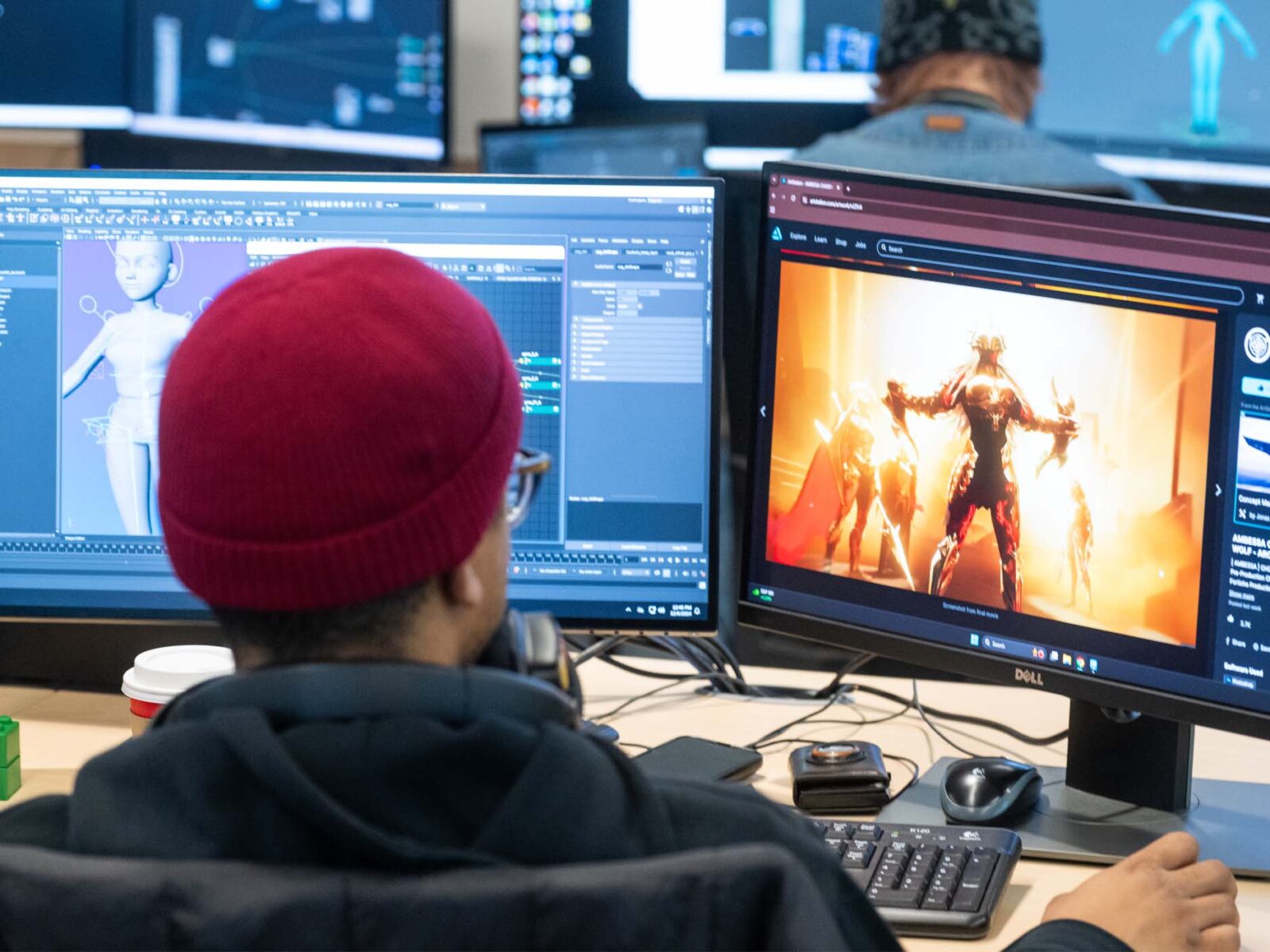
3D animation brings characters, objects, and environments to life in a virtual three-dimensional space. Everything has height, width, and depth. Unlike 2D animation, which works on a flat surface, 3D animation presents a fully digital world you can move through from any angle. Instead of drawing frame by frame, 3D animators work with digital models, which are basically virtual puppets built from polygons and geometry. Those models are given a skeleton, called a rig, which allows animators to pose and move them like a puppeteer controls a puppet. Animators set key poses at specific points in time, and the software calculates the movement in between.
Examples of 3D animation:
- Shrek
- Toy Story
- Despicable Me
Still Figuring Out Your Animation Style?
That’s what we’re here for. We’ll help you explore your options and find what fits.
View Student's WorkAnime
Anime is a style of animation that originated in Japan and refers to films and TV shows that have a distinctive visual style. Early anime was influenced by classic Disney animated films, particularly the large eyes and simplified character designs that Walt Disney popularized in the 1930s and 40s. And that influence is still visible today. However, over the decades, anime grew into its own medium entirely, with its own unique visuals, storytelling, dynamic action sequences, camera movement, and character-driven narratives with strong themes.
Also, it’s important to note that anime isn’t tied to one technique. 2D, 3D, and stop-motion also fall under that umbrella. This makes it more of a style of animation rather than a technique, but still worth covering on this list because of how unique it is.
Examples of Anime:
- Naruto
- Attack on Titan
- Demon Slayer
Hybrid Animation
Hybrid animation is the blend of two or more animation styles. The most common combination is a 2D/3D animation hybrid or hand-drawn elements placed within a 3D digital environment. But hybrid animation can also mean mixing stop-motion with CGI or dropping animated characters into live-action footage. It’s a style that’s become increasingly common as technology makes it easier to combine techniques and as filmmakers look for visual approaches that don’t fit neatly into one category.
Examples of Hybrid Animation:
- Into the Spider-Verse
- Arcane
- K Pop: Demon Hunters
Stop Motion
Stop motion is an animation technique in which animators move physical objects and photograph them one frame at a time — thousands of times. When they play the images back in rapid sequence, it creates the illusion of movement. A few minutes of stop motion animation can take several hours, and a full feature film can take years to complete. But that’s what makes it so distinctive — there’s a tactile, handmade quality to everything you see that can’t be replicated. It’s a filmmaking technique that requires as much patience as it does creativity.
Examples of Stop Motion:
- Coraline
- Kubo and the Two Strings
- Fantastic Mr. Fox
Claymation
Claymation is a specific type of stop motion that uses sculpted clay figures as characters. Similar to stop motion, the figures are posed, photographed, repositioned, and photographed again, thousands of times, until a full scene is built frame by frame. Claymation usually uses plasticine clay rather than modeling or pottery clay. Plasticine is oil-based and never dries out or hardens, which allows animators to reshape or bend it endlessly.
Examples of Claymation:
- Gumby
- Pingu
- Wallace & Gromit
Cut-Out Animation
Cutout animation is an animation technique that uses flat, pre-cut characters and props originally made from paper, card, or fabric. Like other stop-motion processes, the pieces are moved and repositioned frame by frame to create the illusion of motion. Today, most cutout-style animation is created digitally, using scanned images or vector graphics rather than physical materials. South Park is a great example: its pilot episode was made with actual paper cutouts before the show switched to computer software.
Examples of Cut-Out Animation:
- South Park
- Blue’s Clues
- Little Bill
Motion Capture
Motion capture, usually called mocap, records the real-life movements of actors and translates them into data that creates a digital character. Actors wear suits covered in reflective dots or sensors, special cameras track every movement in three-dimensional space, and then the data is fed into animation software to bring a digital character to life with natural, human-like motion.
It’s the technology behind characters like Gollum in The Lord of the Rings and most modern video game cinematics, like God of War: Ragnarok. Animators still clean up the data afterward, but mocap dramatically reduces the time it takes to animate realistic movement.
Examples of Motion Capture Animation:
- Avatar: Fire and Ash
- The Polar Express
- Kingdom of Planet of the Apes

Honorable Mentions
Here’s a handful of other styles that didn’t make the main list but still influential in their own ways:
Rotoscope Animation: Rotoscoping is a technique where animators trace directly over live-action footage, frame by frame, to create realistic character movement. It was invented in 1915 by Max Fleischer, who used a special projector to shine film frames onto a drawing surface. A great example of rotoscope animation is the music video to a-ha’s song “Take on Me.”
Live-Action Animation: A hybrid technique that combines real film footage with animated elements, blending the two so characters or effects appear to exist within a physical, filmed world. Examples include Who Framed Roger Rabbit or Space Jam.
Cel Shading: An animation technique that makes 3D-modeled objects look flat and hand-drawn, using bold outlines and solid blocks of color instead of realistic gradients or lighting. You’ll see this in games like Legend of Zelda: Breath of the Wild.
Go Motion Animation: A stop-motion style that adds motion blur to puppets or models by moving them slightly during the camera exposure, rather than only between frames. This smooths out the jerkiness typical of traditional stop-motion. Go Motion Animation is used in films like Star Wars: Episode V – The Empire Strikes Back and Dragonslayer.
Flash Animation: Animation created with Adobe Flash (now Animate), using vector graphics that stay crisp and sharp at any size and load quickly, which made it the go-to format for early web animation and cartoons in the 2000s. Think of this as shows like Total Drama Island and Little Einsteins.
Motion Graphics: Animation focused on design elements — logos, data visualizations, text — rather than characters or story. It’s the style behind title sequences, commercials, and explainer videos. Things like a sports arena kiss cam frame or the name labels that pop up during a news report are actually motion graphics.
Real-time Animation: Real-time animation creates moving computer graphics instantly as they happen, instead of a computer pre-rendering them. It reacts immediately to live inputs like a user’s game controller, a touchscreen, or a motion-capture camera tracking a real person’s face and body. The Mandalorian used real-time animation for backgrounds and scenery.

Finding Your Style
With so many animation art styles and techniques to choose from, picking one can feel impossible.
Here’s the good news: there are no rules. Animation doesn’t tell you to pick a lane and stay in it forever. Some of the most exciting work being made right now is animation that blurs the line between different styles. There’s room for you to explore and experiment.
Your style doesn’t have to be locked in on day one, either. Most animators spend their first few years trying out different techniques before landing on what feels like theirs. And even then, it keeps evolving. Sometimes, the goal isn’t to find the right style. It’s about finding the one that lets you express yourself the best.
Frequently Asked Questions
-
Is animation a genre?
Animation isn’t a genre. It’s more of an art form. Just like sitcoms or movies with real people, you’ll find animated TV shows and movies in any genre: horror, comedy, drama, sci-fi, romance, and more.
-
What’s the difference between cartoons and animation?
Animation is an art form that creates the illusion of movement by showing several images in a quick sequence. This includes stop motion, 2D, 3D, and other types of animation. A cartoon refers to a specific style of animation, typically characterized by exaggerated, simplified, or stylized character designs, often (though not always) comedic or aimed at younger audiences. Looney Tunes, SpongeBob SquarePants, and Rick and Morty are textbook examples of cartoons.
-
What software do animators use?
That depends on what type of animator you are. 2D animators might use Toon Boom Harmony or Adobe Animate. 3D animators use Autodesk Maya, Blender, or Cinema 4D.
Motion graphics animators primarily use Adobe After Effects. Every animator, depending on what they’re working on, will use different tools and software to get the job done.
Master Animation Techniques at Champlain College
At Champlain, you won’t wait years to start making your own animations. From your first semester, you’ll start by learning animation fundamentals, art principles, storytelling, concept creation, and idea generation. You’ll also get hands-on with industry-standard software like Maya, Unreal Engine, and Adobe Creative Suite.
You’ll work in professional-grade studios equipped with motion capture and green-screen technology, and collaborate with Game Art, Filmmaking, and Design students on projects that reflect real production pipelines. Plus, Burlington, Vermont’s thriving arts scene and strong connections to the Northeast’s entertainment industry make it an ideal place to start building the network you’ll need after graduation.
Looking for more information about Champlain College? Start here!
Fill out the form to receive helpful information!
All trademarks, service marks, trade names, and logos referenced in this article are the property of their respective owners. All company, product, and service names used in this article are for identification purposes only.